
Last updated November 23, 2026
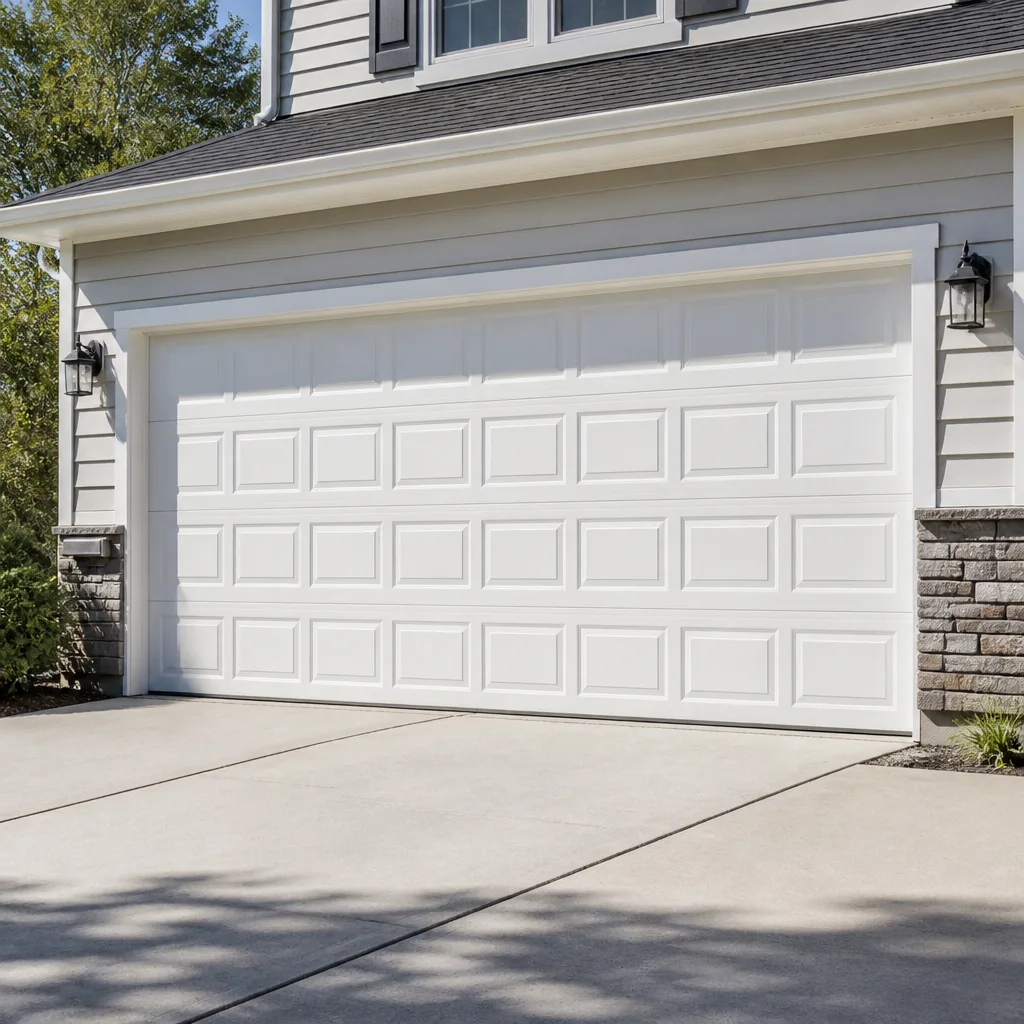 Raised-panel steel
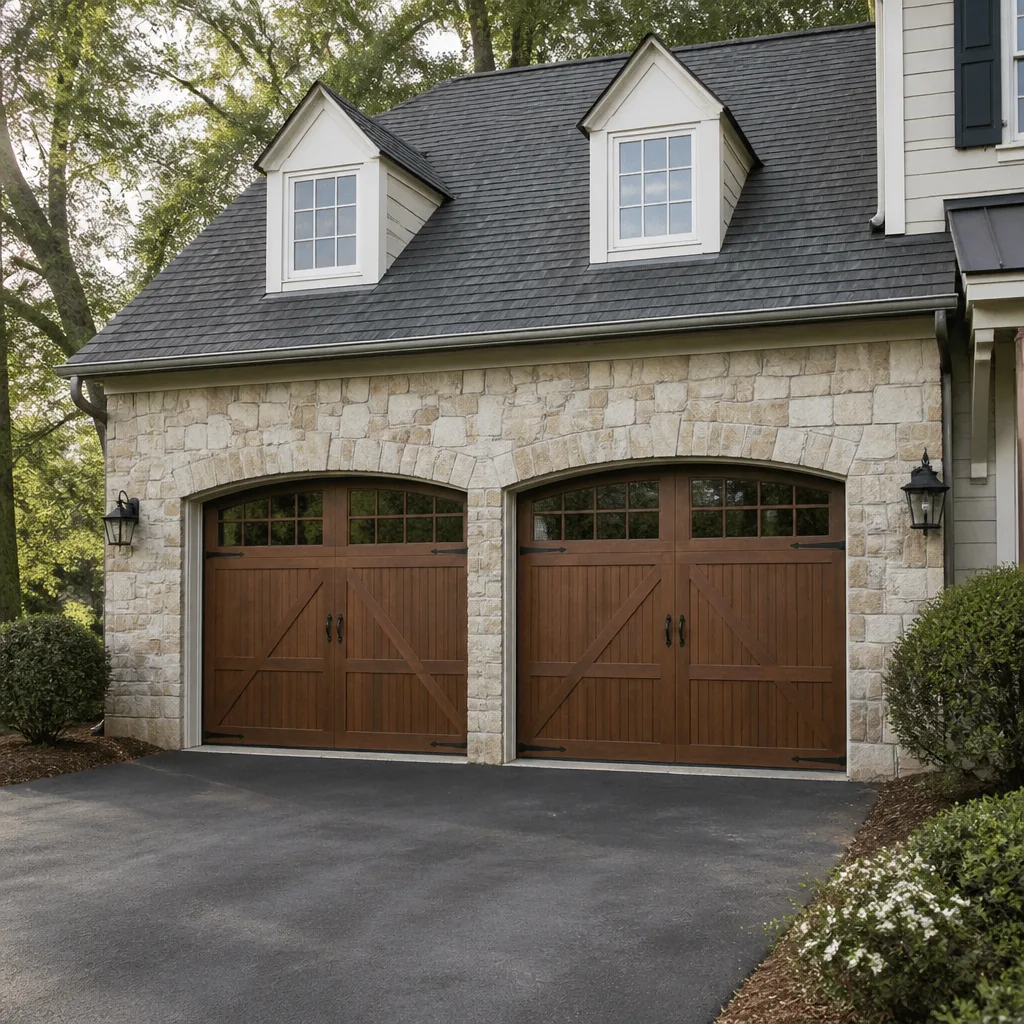 Carriage house
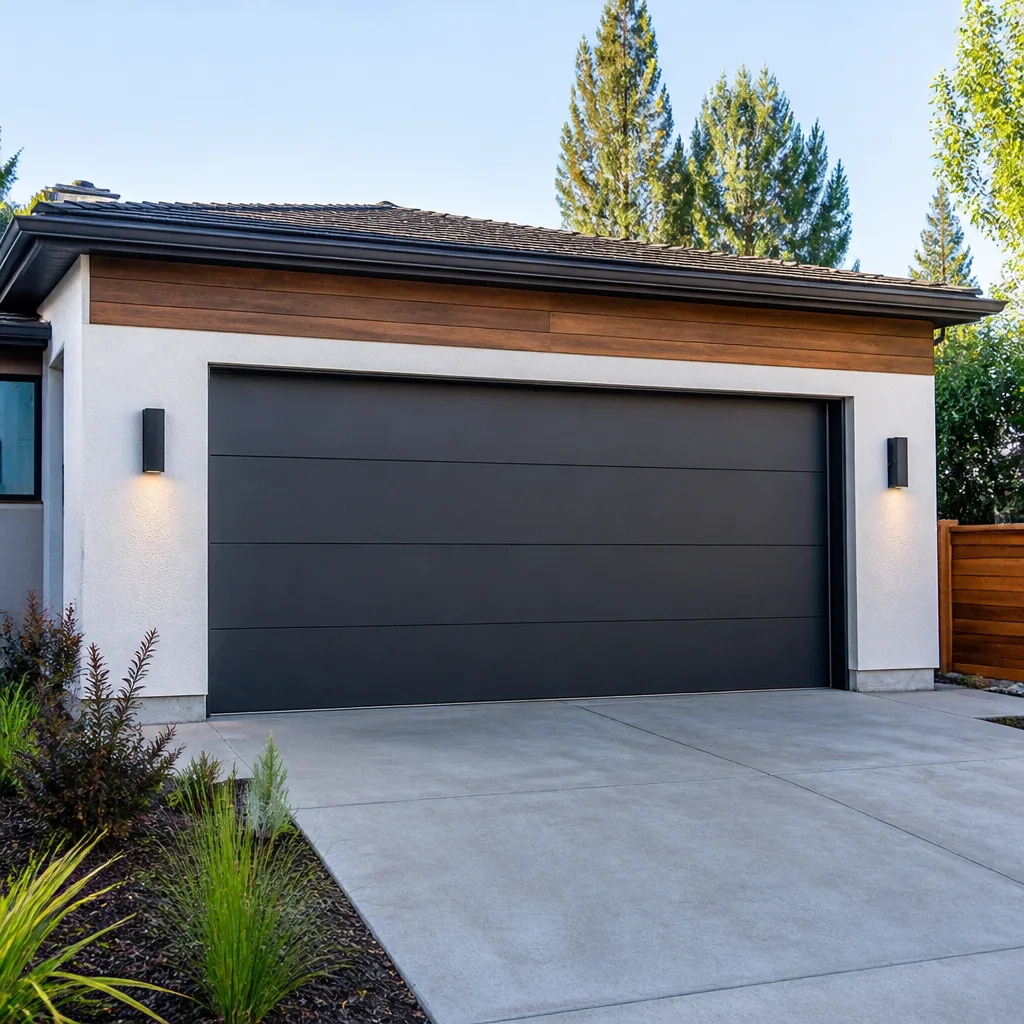 Modern flush
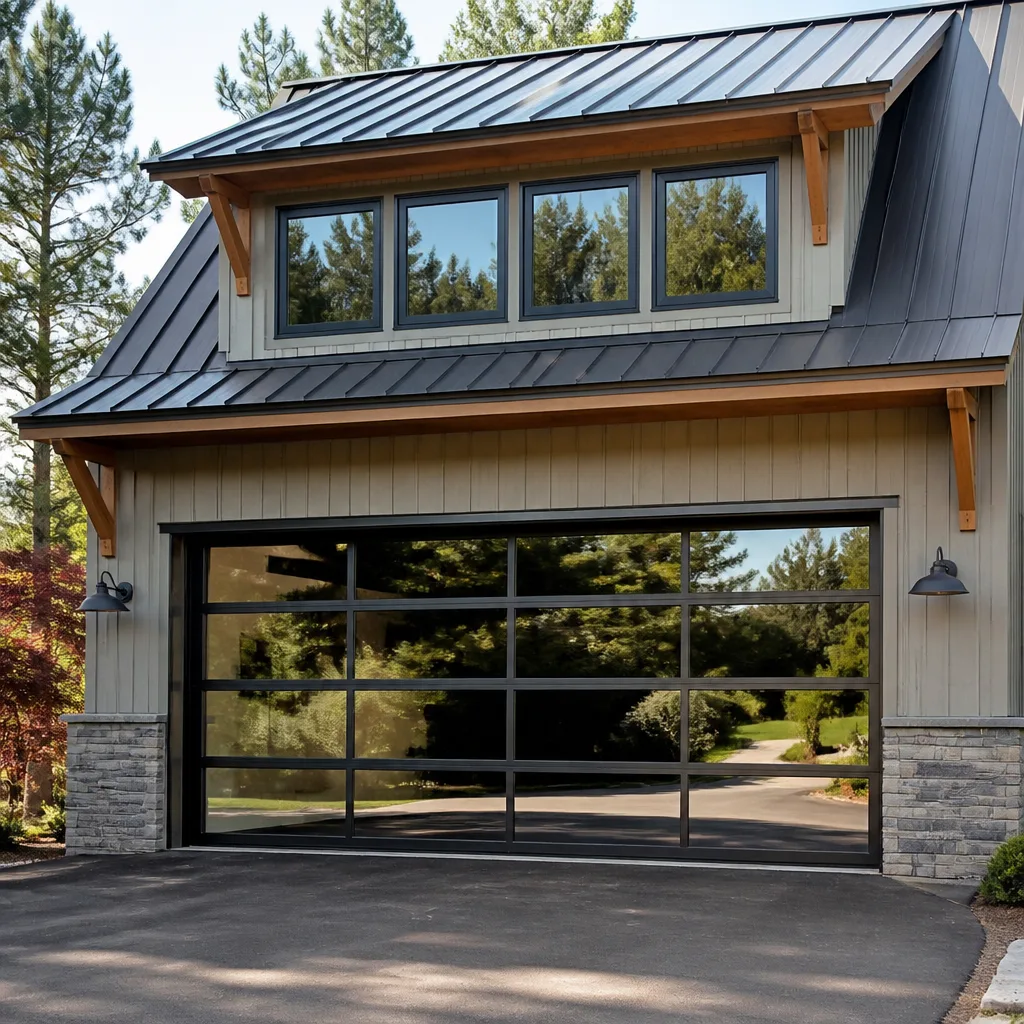 Full-view glass
 LiftMaster openers
 Chamberlain openers
Full 25-point door and opener safety check with every visit - springs, cables, rollers, tracks, and your LiftMaster or Chamberlain opener included
You get a price before we start. It does not change when the pro arrives.
Get your free estimateGarage Door Warning Signs: A Shoreline Homeowner’s Reference Guide
That grinding noise your door makes on the way up? It’s not “just how it sounds.” It’s a torsion spring telling you it’s nearing the end of its cycle life before it snaps under full tension. Most Shoreline homeowners wait for a total failure – a door stuck open at midnight, a snapped cable whipping the track – because nobody taught them what the early signals mean. A garage door gives you weeks of warnings before it quits. This guide translates those warnings: the sounds, the speed changes, the visual clues most people walk past every day. Read it once and you’ll know which symptoms mean “schedule a repair” and which mean “stop using the door right now.”
Quick Answer
A garage door that grinds, squeals, pops, hesitates, moves unevenly, or shows frayed cables, worn rollers, or bent tracks is signaling a specific mechanical failure – often a spring or cable nearing the end of its life. Signs involving snapped cables, broken springs, or a door that slams or won’t stay up mean stop using the door immediately and call for emergency service. Slower-developing signs like squeaks and minor vibration usually allow a few days to schedule a repair, but not weeks – especially in Shoreline’s damp climate.
Styles & brands we work with
- Raised-panel steel
- Carriage house
- Modern flush
- Full-view glass
- LiftMaster openers
- Chamberlain openers
Table of Contents
- Sound-by-Sound: What Each Noise Tells You
- Visual Warning Signs Most Homeowners Miss
- Speed and Movement Irregularities
- The Danger Tier: Stop Now vs. Schedule Soon
- How Shoreline Humidity Accelerates Failure
- Seasonal Inspection Checklist for Shoreline Homes
- Opener Warning Signs: When the Motor Is the Problem
- Common Mistakes to Avoid
Sound-by-Sound: What Each Noise Tells You
Every noise a garage door makes points to a specific component. Learning the difference is the fastest way to know what’s wearing out before it fails. In our experience across Shoreline, homeowners describe these four sounds most often – and each one has a different cause and a different urgency level.
Grinding
A low, rough grinding sound usually comes from dry or worn rollers, a torsion spring losing tension, or a bent track the rollers are dragging against. Grinding that gets louder over a few weeks is the classic spring warning. It means metal is grinding on metal instead of rolling smoothly, and it accelerates wear on everything it touches.
Squealing
High-pitched squealing is almost always a lubrication problem – hinges, rollers, or the torsion tube running dry. It’s the least urgent sound on this list, but ignoring it lets friction eat into the rollers and eventually the spring. A squealing door in Shoreline tends to get worse heading into the wet months, when the moisture changes how the metal moves.
Popping
A sharp pop – especially when the door is opening or closing – is a cable slipping or a spring catching. Popping is a yellow-to-orange warning. It means something is out of position and under load. One pop a week turns into a pop every cycle fast, and the next stage is often a snapped cable or a broken spring.
Rattling
Rattling or banging points to loose hardware: hinges, brackets, or track bolts that have worked loose. It’s rarely dangerous on its own, but loose hardware lets the door shift in the track, which wears the rollers and eventually stresses the panels. Rattling combined with any visual sign (see next section) is worth a professional look.
Quick Reference: Sound to Cause to Urgency
- Grinding – worn rollers, dry spring, or bent track. Schedule a repair within days.
- Squealing – dry hinges and rollers. Schedule within a couple of weeks.
- Popping – slipping cable or catching spring. Schedule within a few days; stop-use if it sounds like a snap.
- Rattling – loose hardware. Schedule within a couple of weeks; inspect the track.
If a noise is new and it’s loud enough to hear inside the house, that’s your cue to get it checked. When we send a technician out for garage door repair, the first five minutes of a job are usually spent diagnosing exactly which sound is coming from where.
Visual Warning Signs Most Homeowners Miss
Sound gets your attention; what you can see gets missed because most people don’t look up. Four visual checks take under two minutes and tell you more about a door’s health than any noise it makes.
Cable Fraying
The cables run along the sides of the door, on both sides of the spring assembly. Look for broken strands, a cable that looks “furry” or has stray wires poking out, or a kink in the line. A frayed cable is one strand away from snapping, and a snapped cable lets the door drop or hang crooked immediately. This is a stop-use sign, not a schedule-soon sign.
Roller Wear
Rollers should be round and turn freely. A worn roller looks flat-spotted or slightly oval, or has a wobble as it rolls along the track. Worn rollers make the door drag, which adds load to the springs and the opener. It’s an easy fix that prevents a bigger one.
Track Gaps
A visible gap between two sections of track, or a track that has been knocked slightly out of alignment, will cause the rollers to catch. Stand inside the garage and sight down each rail. It should look like one straight line. A dented or bowed track usually means the door hit something or the track anchored loose.
Panel Stress Cracks
Stress cracks show up around the hinges, at panel seams, and in the corners of individual sections. A hairline crack can be nothing; a crack that runs with a visible gap in the metal is a structural warning. Cracks usually mean the door has been running with unbalanced or misaligned hardware for a while.
- Look at both cables for stray wires or kinks.
- Check the rollers for flat spots or wobble.
- Sight down each track section for straightness.
- Scan every panel seam and hinge point for cracks.
Do these once a season. If you find a stop-use sign, don’t cycle the door to test it. If it’s a schedule-soon sign, call us and we’ll book a repair window for you.
Speed and Movement Irregularities
The way a door moves is a moving diagnostic report. A healthy door travels at an even pace in both directions and stops without a jolt. Anything else is describing a mechanical problem.
Hesitation at the Start or a Specific Point
A door that hesitates before it starts, or stalls at one point in its travel, points to a spring losing tension or an opener motor struggling against extra load. Hesitation that appears at the same height every cycle is the clearest signal – the door finds resistance at that point and the opener has to work harder to get past it.
Jerking and Uneven Movement
Jerking is usually a track problem or a roller that’s catching. One side of the door moving before the other means the springs or cables are out of balance. An unbalanced door puts uneven strain on the opener, and that’s a common reason garage door opener repair gets called when the opener was never the actual problem.
Slamming or Failing to Stay Up
A door that slams down is a spring problem, plain and simple. Torsion springs are what hold the weight of the door; when they’re failing, nothing is counterbalancing the door. A door that won’t stay in the open position is showing the same failure from the other direction. Both are stop-use signs. We answer 24/7 for exactly these calls.
Speed That Changes From Week to Week
Opener speed isn’t something to fix with a setting change. If a door that used to move quickly now crawls, the motor is compensating for resistance somewhere in the door. That’s a symptom, not a setting to adjust.
If your door’s movement has changed in the last month, it’s worth having a technician diagnose it. Our technicians have up to 10 years of experience and are trained on the equipment you already own – LiftMaster, Chamberlain, Genie, Clopay, Amarr, Wayne Dalton, Craftsman, and Raynor.
The Danger Tier: Stop Now vs. Schedule Soon
Not every warning sign has the same weight. Some mean a component failed and the door is physically unsafe to move. Others mean something is wearing out and you have days, not weeks, to get it scheduled in. Grouping signs by urgency is the single most useful skill in this guide.
Stop Use Immediately
These signs mean a spring, cable, or structural part has already failed or is one cycle from failing. Do not open or close the door by hand or by opener. Keep people and vehicles clear until a trained technician assesses it.
- Snapped spring – the door will feel extremely heavy or won’t lift at all.
- Frayed or snapped cable hanging loose.
- Door that slams down or won’t stay open.
- Door hanging crooked in the track.
- A loud bang from the garage while the door was moving.
High-tension springs are one of the most dangerous parts of a garage door system to touch. The tension on a torsion spring can be hundreds of pounds, and a spring that’s mid-failure can release suddenly. This is not a component for DIY repair. A trained technician brings the right tools and the right technique for the job. If you’re in this tier, call to get a pro out: (877) 792-6114. We answer 24/7. Fast dispatch from 7am to 7pm, Sunday through Friday.
Schedule Within Days
These signs mean a part is wearing and the door works for now, but letting them go turns a small repair into a bigger one.
- Grinding or popping noises.
- Door hesitating at one point or jerking.
- Flat-spotted rollers or track that’s slightly out of line.
- Visible hairline cracks near hinges.
Schedule Within a Couple of Weeks
- Squealing from hinges or rollers.
- Rattling or loose hardware.
- Vibration you can feel more than hear.
If you’re unsure which tier your symptom lands in, describe it to us and we’ll tell you whether it’s safe to use the door while you wait for an appointment. The price is quoted and agreed before any work starts, so there are no surprises on the invoice.
How Shoreline Humidity Accelerates Failure
Shoreline’s wet, marine-influenced climate changes how fast a garage door moves from warning sign to failure. The door itself stays dry under the roof, but the garage – and everything in it – holds moisture through the wet months. That changes the timeline in ways that surprise homeowners who moved here from drier places.
Why Moisture Speeds Things Up
Metal hinges, springs, and cables lose lubrication faster in high humidity. The oil that keeps a hinge quiet in August is gone by February, and the friction that starts as squealing begins eating into the moving parts. Steel hardware develops surface corrosion at a quicker pace on the coast-adjacent stretches of the city, and a cable that’s already frayed loses strength faster once it’s rusting from the inside out.
Wooden doors, which you’ll see on some of the older homes near the Richmond Beach and Brookside neighborhoods, absorb moisture and swell slightly during the wet season. A door that fits perfectly in July can bind in its track by January, and the binding shows up as jerking or hesitation.
What That Means for Your Timeline
A dry-climate homeowner might get a year out of a squealing hinge before it costs real money. In Shoreline, expect that window to be considerably shorter. When you hear squealing, treat it as this-season signage, not next-year signage. Popping and grinding, which would be a “watch it” sign in a dry climate, are close to “schedule it” signs here.
Similarly, a panel crack or minor track issue that’s stable in dry weather can widen during the wet months. This is why our advice on garage door spring repair is to treat spring noise as a same-month event in Shoreline, not a same-year event.
Seasonal Inspection Checklist for Shoreline Homes
A twice-a-year walk-through catches almost everything on this list before it becomes a breakdown. Fall and spring are the natural checkpoints because they line up with Shoreline’s wet-to-dry transitions. Set a reminder on your phone and use this order.
- Listen first. Run the door up and down once and stand still. Note every sound: grind, squeal, pop, rattle, or none.
- Watch the travel. Does it start evenly? Any hesitation at the same height twice in a row? Any jerking or a lopsided path?
- Walk the track. Sight down both rails for gaps, dents, or misalignment.
- Check the cables. Stray wires, kinks, or unusual slack means stop and call.
- Examine rollers. Round, turning, no flat spots, no wobble.
- Look for panel cracks and loose hardware. Hinges, brackets, bolts. Tighten what’s loose; photos of cracks are useful for a technician.
- Test the safety reverse. Place a small object in the door’s path and check that it reverses on contact. If it doesn’t, that’s an opener issue, not a door issue.
- Look at the spring. A torsion spring with a visible gap in its coils has broken. Don’t test it. Call.
The whole walk-through takes about ten minutes. If you’d rather have a trained eye do it, book a repair visit and we’ll inspect while we’re there. Our technicians have up to 10 years of experience and know the specific quirks of common equipment.
Opener Warning Signs: When the Motor Is the Problem
Not all warning signs are about the door. Sometimes the opener is the component in trouble, and its symptoms look a little different from the door’s. Learning them means you won’t mistake an opener problem for a door problem – a distinction that saves you from paying for the wrong repair.
Signs the Opener Is Failing
- The door reverses for no obvious reason. Often a safety-sensor or logic-board issue.
- The light flashes or the motor sounds but the door doesn’t move. Gear or drive problem.
- The door works from the wall switch but not the remote (or vice versa). Usually a radio or receiver issue.
- The opener strains audibly, clicking or whining as the door lifts. The motor is working against resistance, and the door may be the actual problem.
- Intermittent operation. Loose wiring, failing capacitor, or a sensor that’s losing alignment.
Opener Repair Across Brands
We work across the major opener brands, including LiftMaster, Chamberlain, Genie, and Craftsman, covering both older units and the newer smart-drive openers. The brand familiarity matters because every line has its own quirks – a symptom that means “replace the logic board” on one brand can mean “adjust the travel limits” on another. Our technicians arrive already knowing the equipment.
Opener vs. Door: How We Tell Them Apart
When we diagnose a door problem, we test the door’s movement by hand (with the opener disengaged) to see if the resistance is in the door or the drive system. If the door balances and moves smoothly by hand, the opener is the problem. If it’s heavy or binds, the door is the problem and the opener has been compensating for it. That’s why a failing door often gets reported as a failing opener.
If your opener’s symptoms are intermittent or the door is stuck, emergency service is available. We can also handle full replacement when repair isn’t the right call – one company from opener repair through a new install, so you’re not tracking down a separate installer.
Common Mistakes to Avoid
- Running the door on a broken spring “just this once.” A broken spring means nothing is counterbalancing the door’s weight. Running it once puts the full load on the opener and the cables, which is exactly how one broken part becomes three.
- Spraying WD-40 on everything. WD-40 is a penetrant, not a long-term garage door lubricant. It’ll quiet a hinge for a few weeks and then dry out, and on a torsion spring it does nothing useful. Use a proper garage door lubricant on hinges and rollers.
- Assuming the opener is the problem because it’s the visible part. A surprising share of “opener problems” in Shoreline turn out to be door problems the motor was fighting. Diagnose the door first.
- Ignoring a squeak through the wet season. In Shoreline humidity, a squeak treated in October is a small lubrication job; untreated by January it’s often a hinge replacement.
- Adjusting the travel limits on the opener to make a jerking door close. That’s masking the problem. The door will keep jerking, and the opener will keep working harder until it gives out.
- Forgetting the spring cycles. A torsion spring has a finite number of cycles, and a busy household in Shoreline burns through them faster than a quiet one. If a spring is nearing its rated life, don’t wait for the break.
- Treating a frayed cable as a cosmetic issue. Frayed cables are quick, cheap to inspect, and very expensive to ignore. One snapped cable takes the door down immediately and takes the track with it in some cases.
See the difference
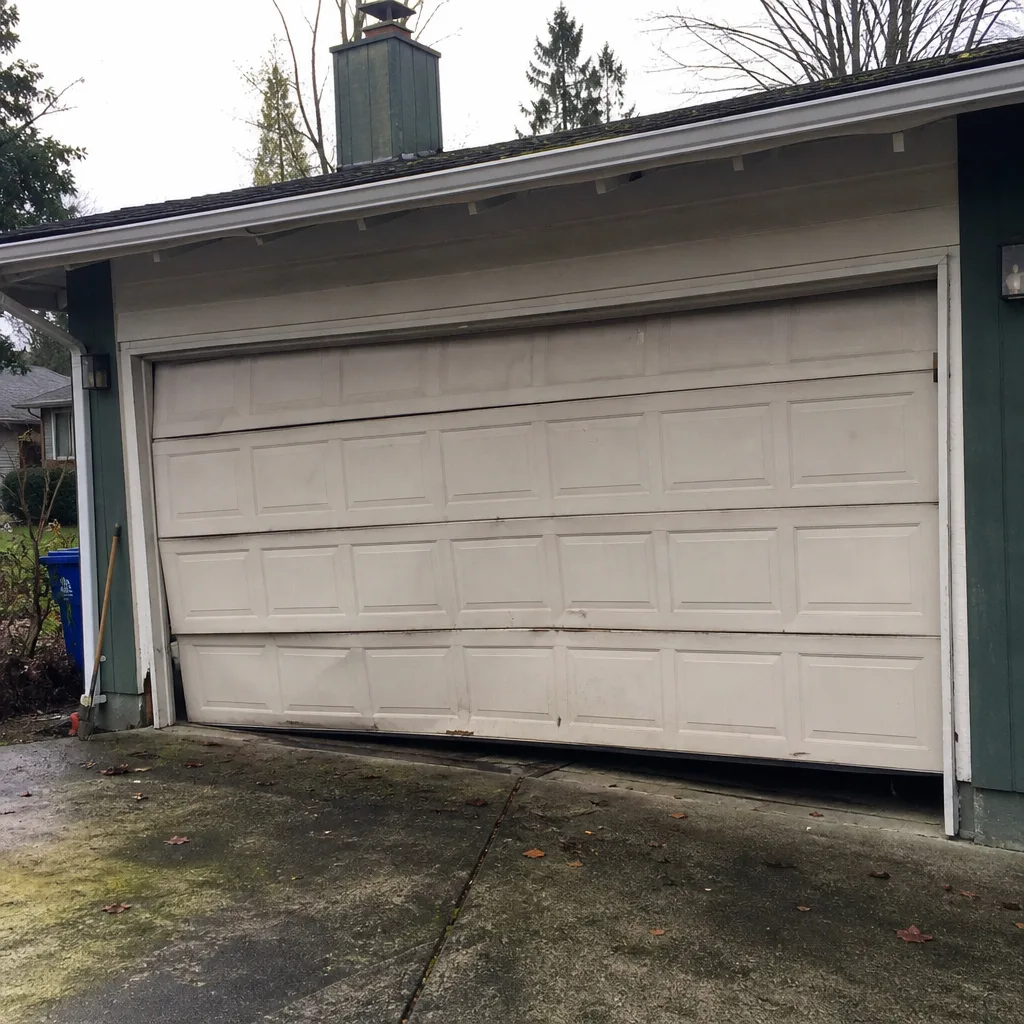 Before
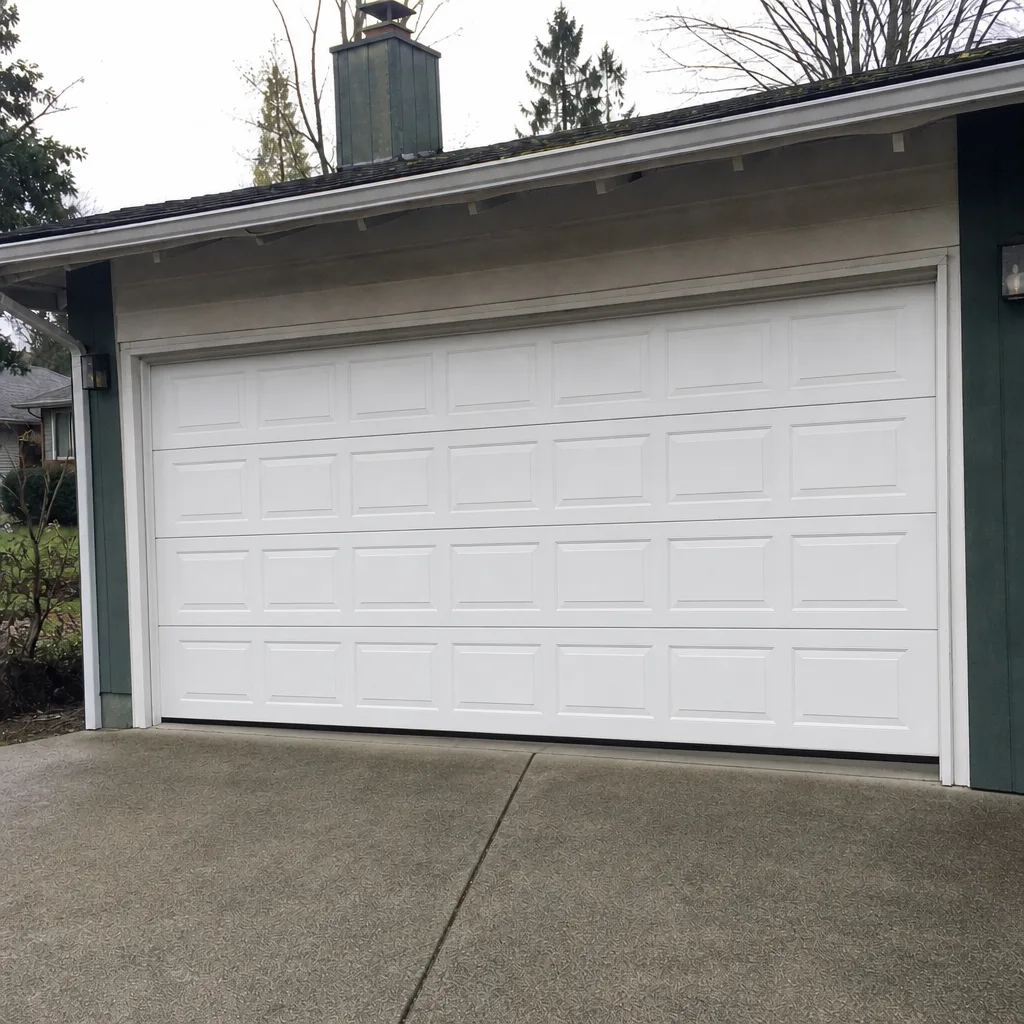 After
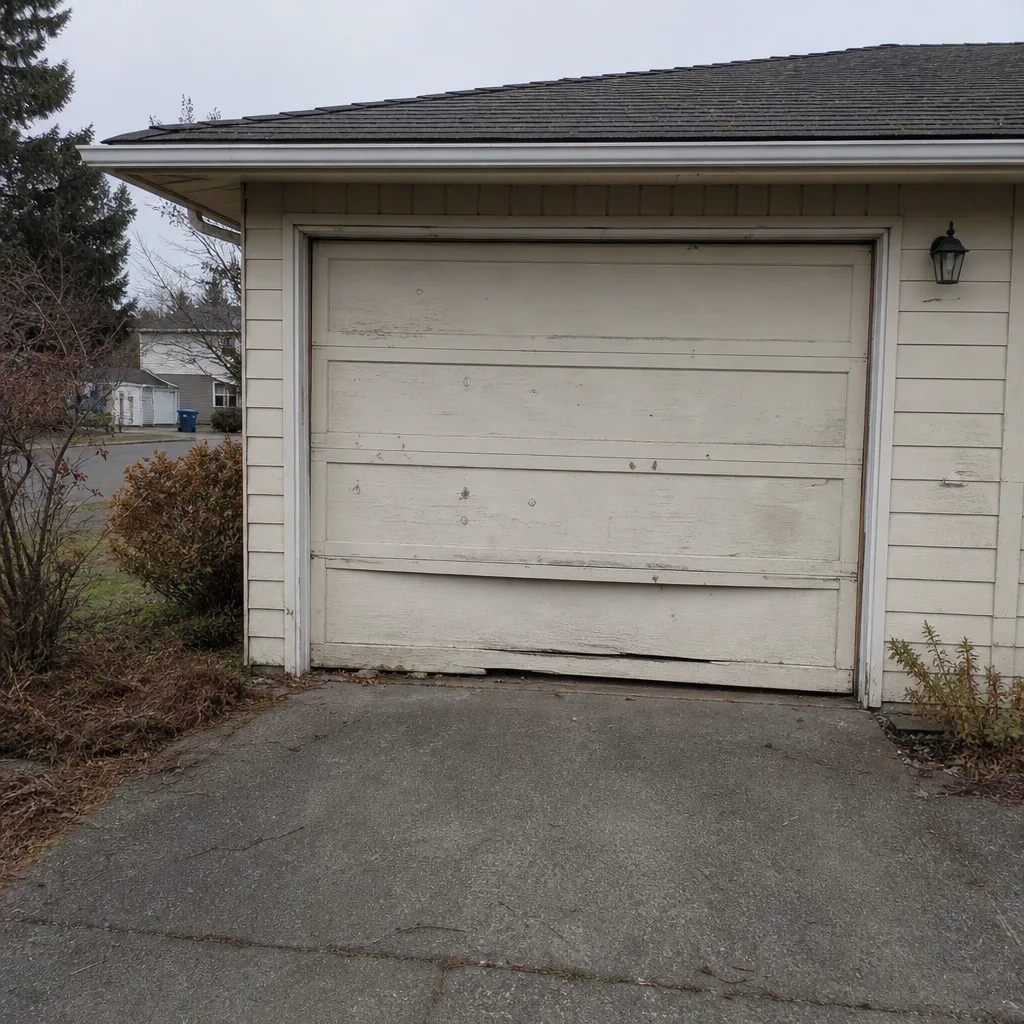 Before
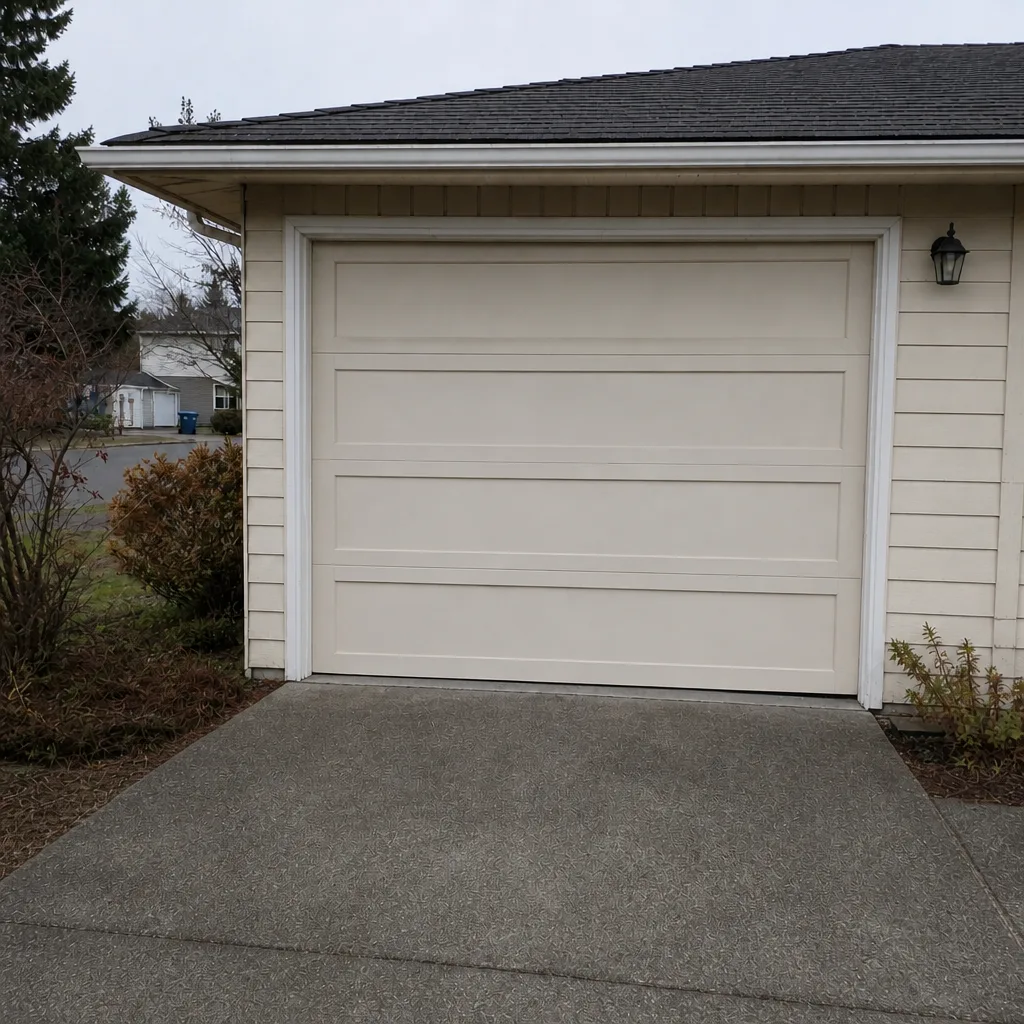 After
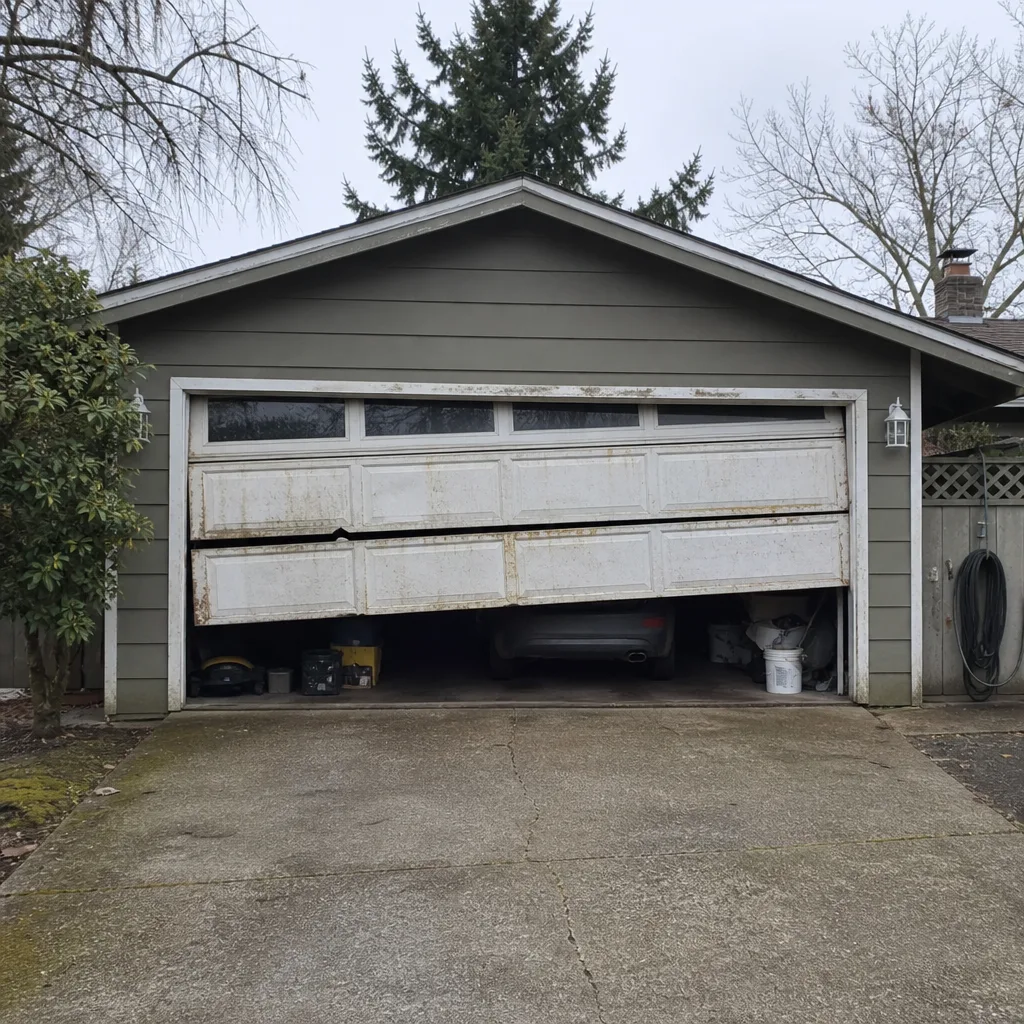 Before
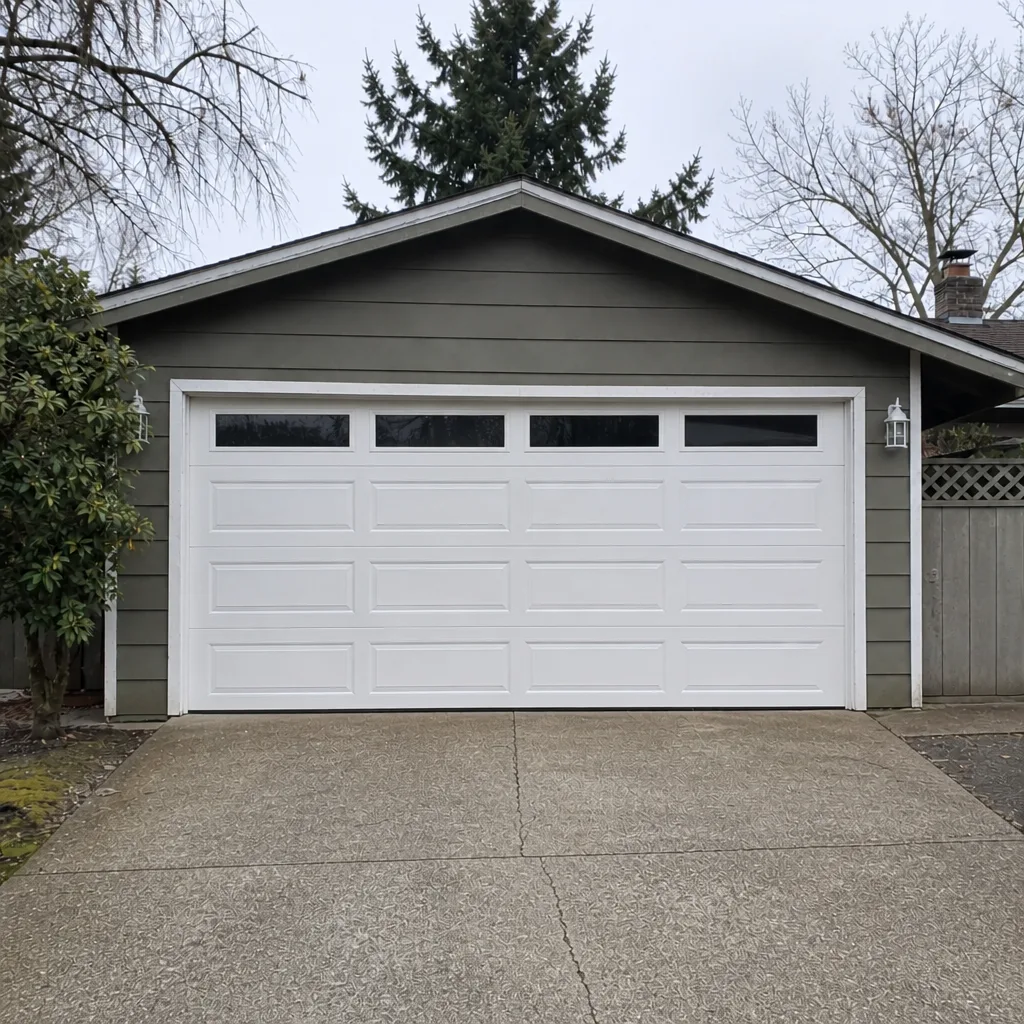 After
When to Call a Professional
Call for a professional when any symptom lands in the stop-use tier: a snapped spring, a frayed or snapped cable, a door that slams or won’t stay open, or a door hanging crooked. Don’t test it yourself. Call us as soon as you notice a spring that’s grinding loudly or a popping that gets sharper each cycle, and call for a professional inspection if the door’s speed or balance has changed in the last month. For anything involving a high-tension spring, a snapped cable, or a door under load, a trained technician is not optional. Springs, openers, panels, full replacements – handled. Shoreline Garage Door Repair Pros offers free estimates in Shoreline – call (877) 792-6114. We answer 24/7. Fast dispatch from 7am to 7pm, Sunday through Friday.
Frequently Asked Questions
A snapped spring or a frayed or snapped cable is the most serious warning sign, because it means the component holding the door’s weight has already failed or is about to. Stop using the door immediately and keep people and vehicles clear until a trained technician assesses it. Call (877) 792-6114 for an exact quote – estimates are free.
Repair cost in Shoreline depends on the component – a spring replacement is priced per spring, an opener repair differently, and a full panel replacement differently again. We give a written estimate before any work starts, and the written quote sets the final price, so you won’t get an invoice bigger than the number you agreed to. Call (877) 792-6114 for an exact quote – estimates are free.
Yes, we offer emergency garage door service for situations where access, safety, or home security is at risk. We answer 24/7. Fast dispatch from 7am to 7pm, Sunday through Friday. Call (877) 792-6114 for an exact quote – estimates are free.
No, the price is quoted and agreed before any work starts. If we find something during the on-site look that wasn’t obvious from your description, we tell you before we touch anything, and the written estimate sets the final price. Call (877) 792-6114 for an exact quote – estimates are free.
The local professional we connect you with is state-licensed and insured as their state requires, and our technicians have up to 10 years of experience. We’re certified to service eight leading brands, and each technician diagnoses on equipment they’ve worked on before. Call (877) 792-6114 for an exact quote – estimates are free.
For squeals and minor rattles, yes – you have a couple of weeks. For grinding, popping, hesitation, or any visual sign of a frayed cable or cracked panel, no – Shoreline’s wet season moves a warning sign to a failure faster than most homeowners expect. Waiting turns a smaller repair into a bigger one. Call (877) 792-6114 for an exact quote – estimates are free.
One sharp pop with no other symptoms allows a few days to schedule a repair. A pop that repeats each cycle, or one that comes with a jolt or a door that moves unevenly, is a stop-use sign. Call (877) 792-6114 for an exact quote – estimates are free.
The Bottom Line
Your garage door tells you what’s about to fail – through grinding springs, popping cables, jerking travel, and cracks you have to look for. The skill in this guide is sorting those signals into two buckets: stop using it now, or schedule a repair soon. Springs and cables that have already failed go in the first bucket, every time, because high-tension parts are dangerous and don’t get a second try. Wear-and-tear signs go in the second bucket, and in Shoreline’s wet climate that bucket moves faster than most people plan for. Read the sounds, watch the movement, check the visuals once a season, and call when the tier is unclear. That’s the whole system.
When your door is telling you something, call (877) 792-6114 for a free estimate. We answer 24/7. Fast dispatch from 7am to 7pm, Sunday through Friday.
Written by the team at Shoreline Garage Door Repair Pros.