
Last updated November 23, 2026
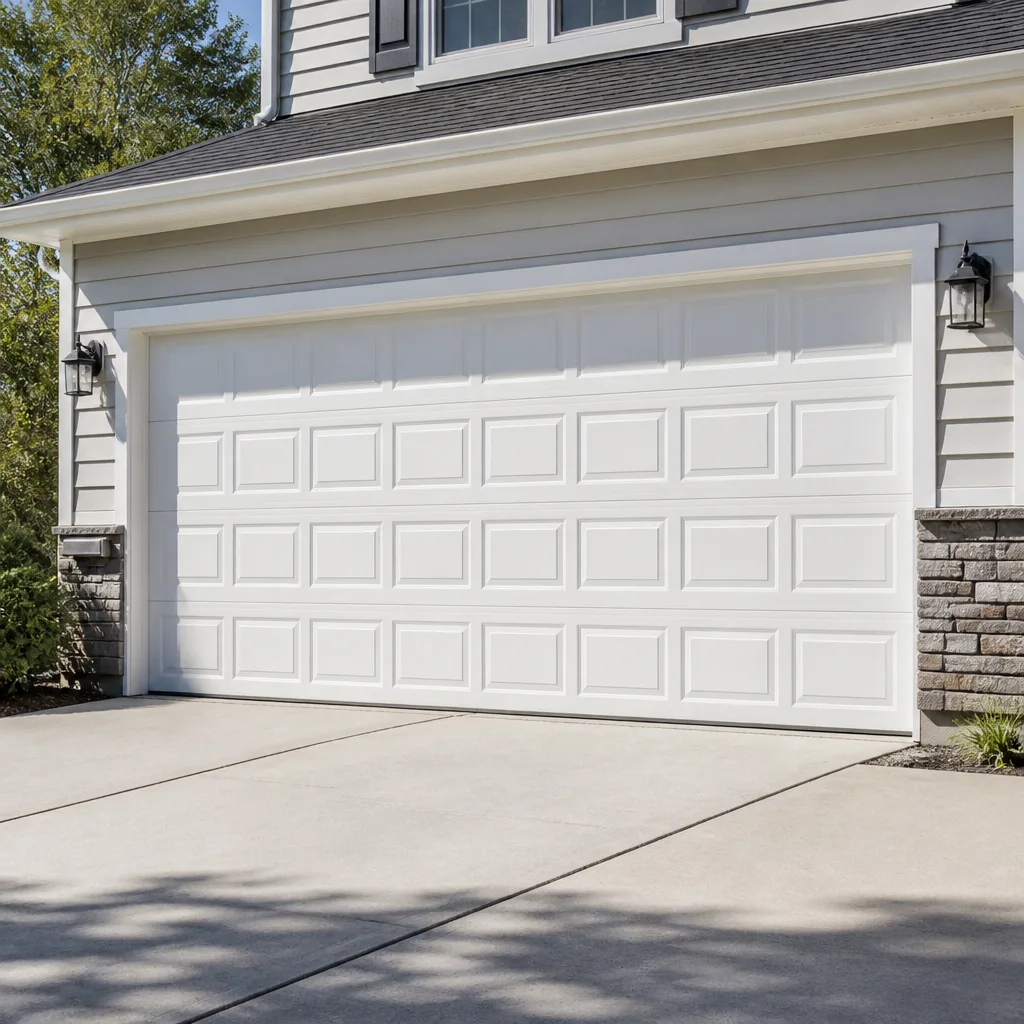 Raised-panel steel
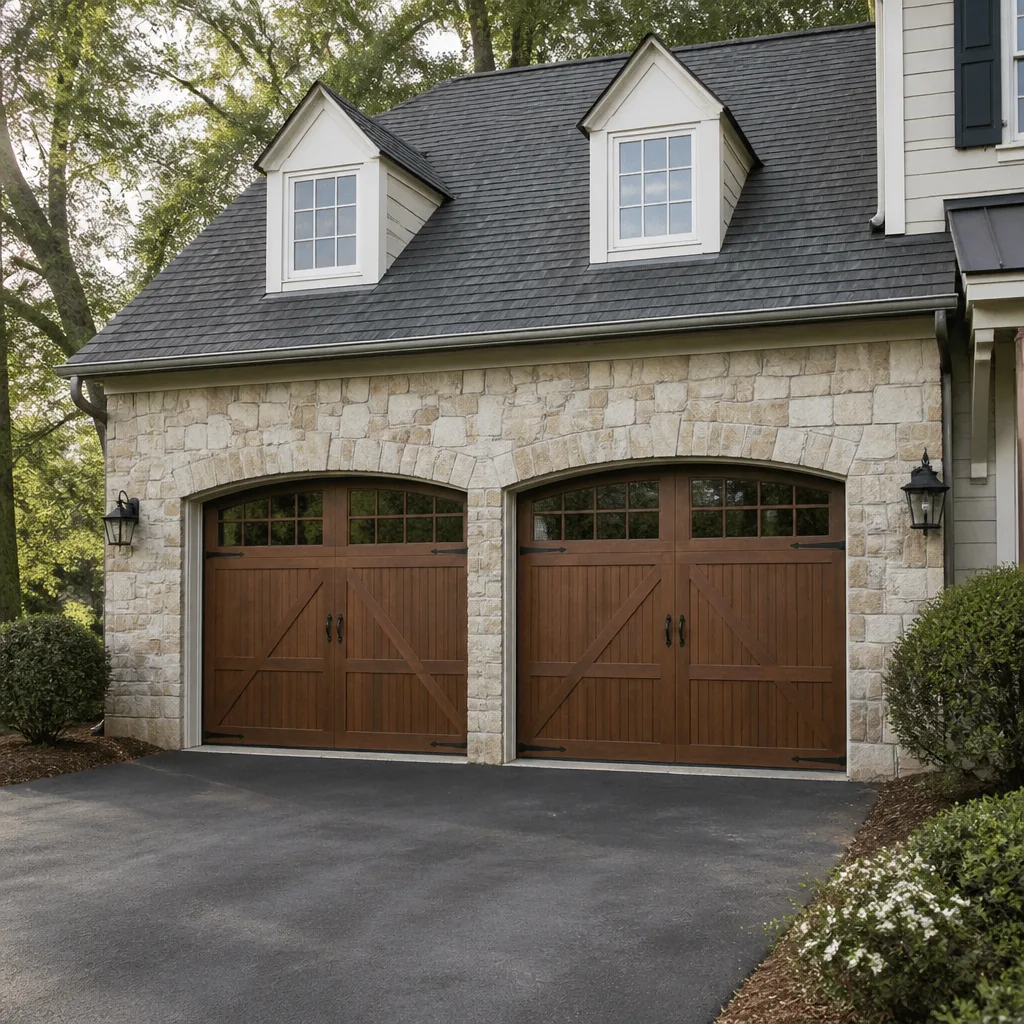 Carriage house
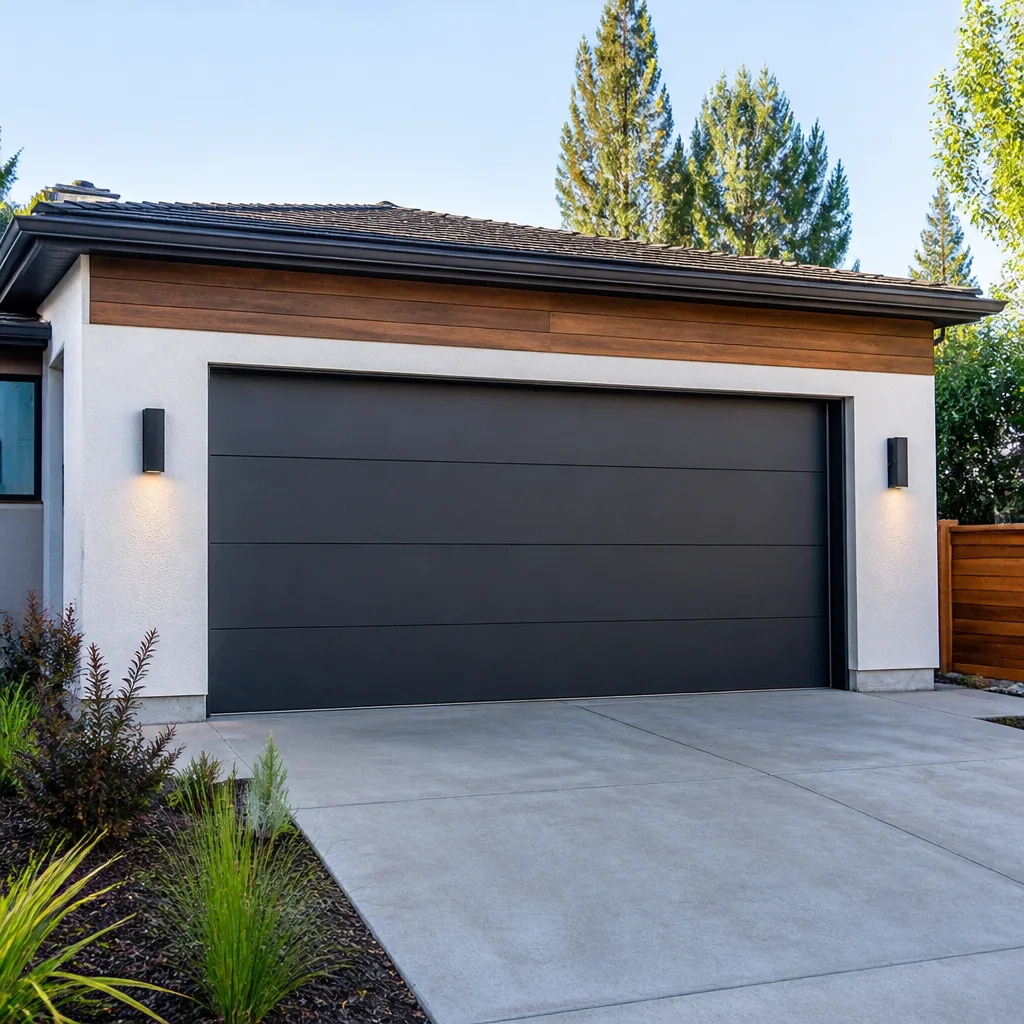 Modern flush
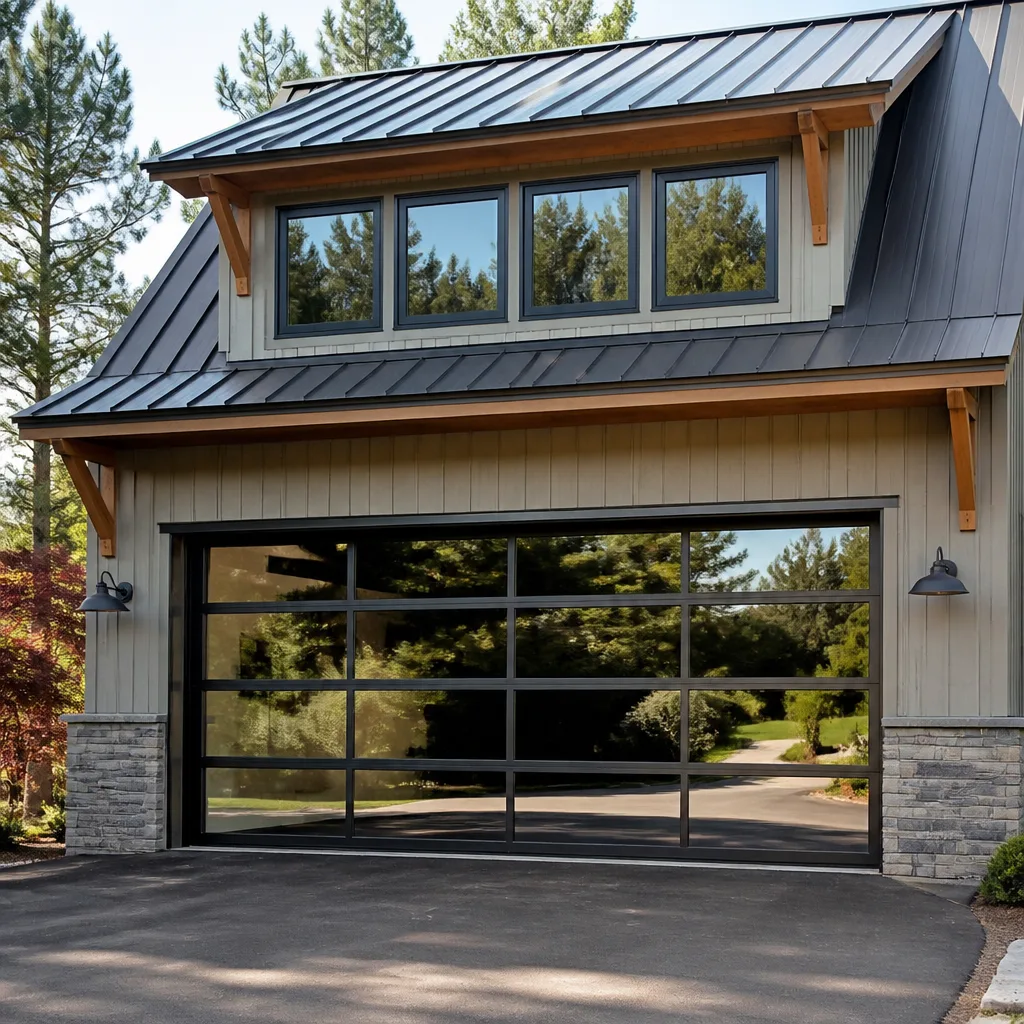 Full-view glass
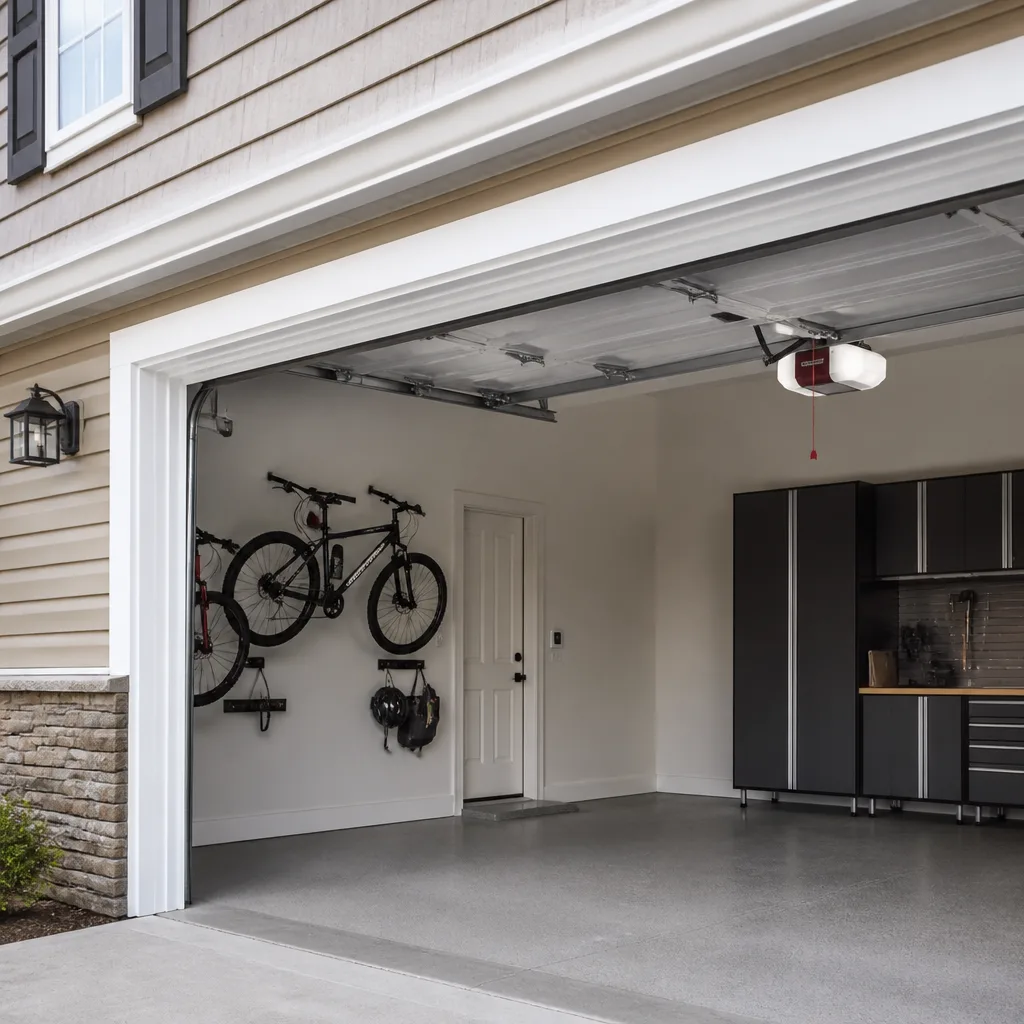 LiftMaster openers
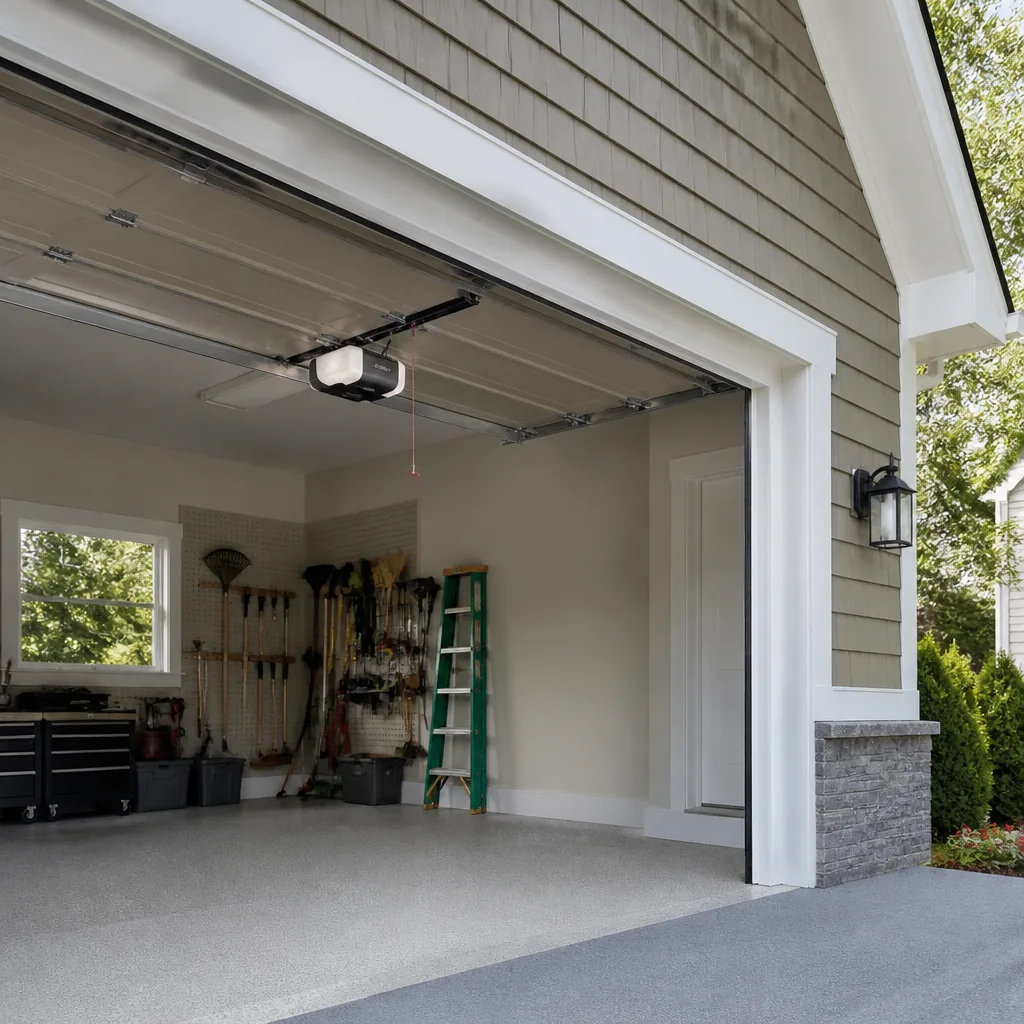 Chamberlain openers
Full 25-point door and opener safety check with every visit - springs, cables, rollers, tracks, and your LiftMaster or Chamberlain opener included
You get a price before we start. It does not change when the pro arrives.
Get your free estimateThe Complete Guide to Garage Doors in Shoreline
Most homeowners treat their garage door as an afterthought until the morning it won’t move. That’s the wrong way around. A garage door is a mechanical system with springs that cycle, cables that stretch, rollers that wear, and an opener that carries the load every single time you leave the house. It runs more than 1,500 open-and-close cycles a year, and Shoreline’s wet winters work on every one of those cycles. In this guide we’ll walk through how each component actually fails, which materials and brands stand up to Puget Sound weather, what a specialist sees that a generalist misses, and when repair stops making financial sense. By the end you’ll know your door as a system, not a slab that goes up and down.
Quick Answer
A garage door in Shoreline typically lasts 15 to 30 years depending on the door type and how well it’s maintained, but the wear components inside it – springs, cables, rollers, bottom seals – will need attention far sooner. Torsion springs commonly give out between 7 and 12 years, openers average 10 to 15 years, and bottom seals in our wet climate often fail inside 5 to 8 years. The single biggest factor in how long your door lasts is catching small wear before it becomes a structural problem.
Styles & brands we work with
- Raised-panel steel
- Carriage house
- Modern flush
- Full-view glass
- LiftMaster openers
- Chamberlain openers
Table of Contents
- How a Garage Door System Actually Works
- How Shoreline’s Climate Ages Your Garage Door
- The Real Lifecycle of Each Garage Door Component
- What a Specialist Diagnoses That a Generalist Misses
- Brands and Materials That Hold Up in the Pacific Northwest
- Repair vs. Replacement: When Each Makes Sense
- What We See on Doors Across Shoreline
- A Simple Maintenance Schedule That Actually Works
How a Garage Door System Actually Works
A garage door isn’t a single mechanism. It’s a counterbalance system, a track system, a sealing system, and an operator, all working together. When one part drifts out of spec, the others compensate until something breaks. Understanding the four systems is the fastest path to understanding why a door that “just stopped working” usually had a warning period of weeks or months.
- The counterbalance system. Torsion springs (mounted on a shaft above the door) or extension springs (running along the sides) carry most of the door’s weight. They’re what let you lift a 150-plus pound door with one hand. This is the highest-stress, highest-failure part of the whole assembly.
- The track and hardware. Vertical and horizontal tracks guide the door’s path. Rollers ride inside them. Hinges connect the panels. Any misalignment here shows up as noise, binding, or a door that pulls off the track.
- The sealing system. Bottom seals, side seals, and top seals keep weather out. In a wet climate they take the most direct punishment from rain and ground moisture.
- The operator. The opener motor, belt, chain, or screw drive, plus the safety sensors and the wall control. Modern units from Chamberlain, Genie, LiftMaster, and Craftsman also handle smartphone control, battery backup, and safety reversal.
Each system has its own failure timeline, which is why a fifteen-year-old door can be perfectly fine structurally while its springs, seals, and opener are all overdue. A technician diagnosing a door that won’t open isn’t just looking at the symptom. They’re checking all four systems in sequence to find which one has drifted. Getting 2026-ready with your garage door starts with knowing which system you’re dealing with. That is exactly what a proper diagnostic from a garage door specialist is designed to answer.
How Shoreline’s Climate Ages Your Garage Door
Shoreline sits in a temperate marine climate with cool, wet winters and dry summers. That pattern is harder on garage doors than most homeowners realize. The problem isn’t extreme cold or extreme heat. It’s moisture and the daily temperature swing. In a typical Shoreline winter, a door that’s sun-warmed to 45 degrees can drop close to freezing overnight. That cycle happens hundreds of times a season.
What that means in practice:
- Springs fatigue faster. Metal expands and contracts with temperature, and torsion springs are already under constant tension. Every cycle adds a little more material stress. A spring that would give 10,000 cycles in a stable climate may give noticeably fewer here – and in our experience springs in Shoreline often fail earlier than the same spring on a door inland.
- Bottom seals dry out and crack. The rubber or vinyl bottom seal is the first thing that touches the wet ground and the first thing to fail. A crackling seal lets water onto the door’s bottom panel, which is where rot and rust start.
- Cables corrode at the drum. Cables pass through steel drums and pulleys; moisture trapped there accelerates corrosion and fraying. A frayed cable is a snap risk and one of the reasons we never recommend homeowners handle cables themselves.
- Wood swells and sticks. Homes across Shoreline and nearby neighborhoods like Richmond Beach and North City have plenty of wood-frame doors. Wet-season swelling pulls frames out of alignment and can make panels rub.
- Metal panels rust at the edges and bottom. Even powder-coated steel doors rust where water sits – along the bottom panel and around hinges.
The takeaway: a Shoreline garage door needs inspection more often than a door in a drier climate. We suggest a visual check every spring and fall – just seals, cables, and the door’s balance. That kind of routine attention pushes replacement out by years.
The Real Lifecycle of Each Garage Door Component
Most homeowners expect a garage door to fail as a unit. In reality, its parts have completely different lifespans. Here are realistic replacement timelines for the components we’re asked about most, and what usually happens first.
- Torsion springs (7 to 12 years). The single highest-failure part. They’re under constant tension and break without warning. A garage door spring repair is a trained technician’s job – never a DIY one – because the spring holds hundreds of pounds of stored energy.
- Extension springs (10 to 15 years). Longer-lived than torsion springs but more prone to violent failure if a safety cable isn’t installed. We check for that on every call.
- Cables (10 to 15 years). They fray at the drum and can snap. A snapped cable makes the door fall on one side and can bend the tracks.
- Rollers (5 to 10 years). Nylon rollers outlast steel rollers in wet climates because they don’t rust. Worn rollers make the door noisy and strain the opener.
- Bottom seal (5 to 8 years). Shortest-lived part in a Shoreline climate because it’s the direct weather interface.
- Opener motor (10 to 15 years). Belt-drive openers last longer than chain drives and are quieter. LiftMaster, Chamberlain, Genie, and Craftsman units dominate the local market.
- Door panels and structure (15 to 30 years). The panels themselves last longest, especially steel and aluminum. Wood needs repainting every few years.
- Safety sensors (10 to 15 years, sometimes less). The photo-eye sensors at the bottom of the tracks get knocked, fogged, or simply quit. A failed sensor is a common “door won’t close” culprit.
The practical rule: if your door has a mix of components that are all aging out at once, the math starts favoring replacement. If most of the door is still within its lifecycle, repair is almost always the smarter decision. A proper garage door repair starts with an honest assessment of which parts are near end-of-life and which aren’t.
What a Specialist Diagnoses That a Generalist Misses
A generalist handyman can fix many things around your house. A garage door isn’t one of them. The reason is the diagnostic depth. Here’s what typically separates a specialist’s call from a generalist’s.
- Brand familiarity. A specialist arrives knowing how a Chamberlain opener behaves when its travel limits drift versus how a Genie unit fails when its main gear wears. That means faster diagnosis and fewer “let me come back with the right part” calls.
- Balance testing. A specialist disconnects the opener and manually lifts the door to check whether the springs are doing their job. If the door can’t hold halfway open, the springs are failing – even if the opener is masking it.
- Load-path inspection. They look at the entire path the door’s weight travels: springs, cables, drums, hinges, rollers, and tracks. A generalist often stops at the obvious symptom.
- Spring and cable safety. A specialist knows the stored energy in a torsion spring can injure someone seriously if handled wrong. A generalist often won’t touch springs and shouldn’t.
- Seal and weather-damage inspection. Specialists look at how the door interacts with the climate. They’ll spot a bottom seal that’s letting water into the panel before the rot shows.
- Opener logic and safety testing. They’ll verify safety reversal, sensor alignment, and force limits – things a generalist often skips.
- Honest repair-or-replace guidance. A specialist has done enough traffic on the same brand of door to tell you when a repair is throwing money at a door that’s already structurally aging.
The pattern we see most often on Shoreline calls: the loud noise or sticking that prompted the call is a symptom, not the root cause. Whether it’s spring tension, an opener problem, or a track alignment issue, the fix is only as good as the diagnosis. A garage door repair that treats symptoms comes back. A repair that addresses the root system holds.
Brands and Materials That Hold Up in the Pacific Northwest
You don’t need a specialty brand in Shoreline – you need the right material for our climate and a brand whose equipment a technician can actually service. Two things matter most: moisture resistance and parts availability.
Material choices:
- Steel doors are the most common and the best value. Insulated steel doors handle Puget Sound weather well as long as the paint layer stays intact. Small chips need touch-up.
- Aluminum doors are lighter and rust-proof, but dent more easily. Good for a low-traffic door.
- Wood doors have real curb appeal on Shoreline homes but need repainting every few years to keep moisture out. Beautiful in drier climates; higher maintenance here.
- Composite and fiberglass doors are the low-maintenance option. They resist swelling and rust, look good, and don’t need painting the way wood does.
Brands we work on:
We service eight of the most widely owned brands on the market – LiftMaster, Chamberlain, Genie, Clopay, Amarr, Wayne Dalton, Craftsman, and Raynor. That brand coverage matters when it’s time to order parts or program an opener. Clopay and Amarr make doors that hold up well in wet climates when finished properly. Chamberlain and Genie cover most of the opener fleet in this area. If your door or opener is on that list, the technician arriving already knows how the equipment should behave before it starts.
Repair vs. Replacement: When Each Makes Sense
The repair-vs-replace question is where homeowners lose the most money in both directions. Replace too soon and you overspend. Repair too long and you throw money at a door that’s already worn out. Here’s how to think about it.
Repair makes sense when:
- The door structure and panels are still solid.
- The failing parts are in their normal wear window – a spring at 9 years, an opener at 12.
- The repair cost is well below the cost of a new door, and the door has years of structural life left.
- The door’s design works for the home and there’s no reason to change it.
Replacement makes sense when:
- The door structure is compromised – deep rust, rot in wood panels, or bent panels.
- Multiple major systems are all failing at once – springs, opener, and cables all at end-of-life.
- The current door is a design or insulation level that no longer fits the home.
- You’re updating a door for curb appeal or energy efficiency.
In our experience across Shoreline, doors that fail on one well-defined part are usually repairable and worth repairing. Doors failing on several at once typically cost as much to repair as to replace. A proper installation is a project, not a same-day fix – it involves measuring, ordering, and scheduling. The right move is a free measure and written price, not a rushed decision.
What We See on Doors Across Shoreline
Shoreline’s housing stock is varied enough that different neighborhoods present different issues.
- Older homes near Richmond Beach and Innis Arden often have wood-frame doors where repainting and moisture management are the biggest ongoing tasks.
- Mid-century homes across North City and Ridgecrest often carry original or first-replacement steel doors. Their springs and openers are frequently the parts due for service.
- Newer construction and remodels outside Lake Forest Park and the Echo Lake area tend toward insulated steel or composite doors, where opener programming and seal alignment are the common fixes.
- Homes close to the Puget Sound shoreline face more humidity and temperature swing. Doors in these areas often need seal replacement a year or two sooner than doors on the ridge.
- Multi-car garages add weight and cycling. Two doors running twice as often cycle through their components in half the calendar time.
The through-line: Shoreline drivers use their garage as a primary entry point, so the door accumulates daily wear faster here than in an inland suburb where the door opens once a day. When the door won’t move, or when it starts making noise on every cycle, a dedicated garage door repair response is the right call.
A Simple Maintenance Schedule That Actually Works
Homeowners ask us for a maintenance routine that doesn’t require tools or expertise. Here’s the simplest version we know.
- Do a visual check every spring and fall. Walk the door’s inner face. Look for cracks in the bottom seal, fraying on the cables, and rust along the bottom panel.
- Test the balance once a year. With the door closed and the opener disconnected, lift the door to halfway and let go. If it doesn’t hold, the springs are failing. Reconnect the opener and call a technician before using it.
- Test the safety sensors every six months. Put an object in the door’s path and close the door. It should reverse. If not, the sensors need adjustment.
- Lubricate the moving parts once a year. A garage door and opener lubricant on rollers, hinges, and the opener’s drive will cut noise and wear.
- Wash the outer face twice a year. Removing grime keeps moisture off the finish and lets you spot rust early.
- Have the springs, cables, and safety systems inspected by a professional at least every two years. The parts that are dangerous to inspect yourself are also the parts that fail worst.
That routine alone will get you a longer door life in a climate like Shoreline’s. If something looks wrong during the inspection, don’t try to fix it yourself. Springs and cables can fail violently, and a professional garage door opener repair call is the right response for anything that isn’t a visual check.
Common Mistakes to Avoid
- Ignoring a bottom seal that’s starting to crack. It looks like a minor cosmetic issue, but water gets behind it, and in a Shoreline wet season the door’s bottom panel can start to rot or rust within a single winter.
- Calling a generalist for a spring problem. Springs and cables are the most mechanically dangerous parts of the system. A handyman who “has a look” is putting you, and himself, at risk.
- Greasing the springs. Lubricant on the springs themselves is a mistake – it attracts dirt onto the spring surface and can accelerate wear. Lubricate the rollers and hinges, not the spring wire.
- Assuming a noisy door is “just an old door.” Noise usually points to a specific worn part – rollers, hinges, or the opener. Fixing the part is far cheaper than a replacement later.
- Skipping the balance test. If the springs are already failing, the opener is doing the heavy lifting. It will fail eventually, and the door may become unusable in the process.
- Buying a new opener without a door check. If the door’s springs or rollers are worn, a new opener will fail prematurely because it’s working against a failing door. Fix the door, then upgrade the opener.
- Waiting until the door completely fails. Component failures announce themselves weeks or months before they break. Catching them early is the difference between a small repair and a bigger bill.
See the difference
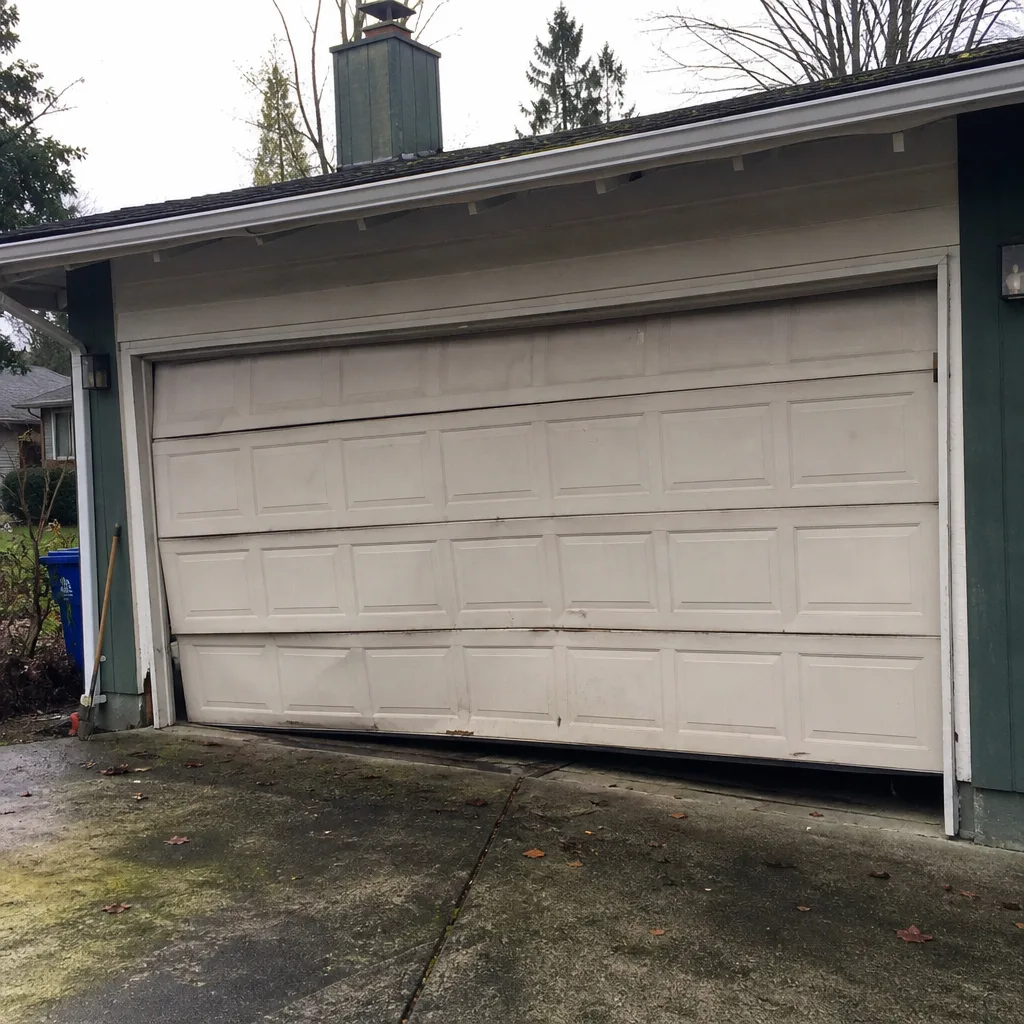 Before
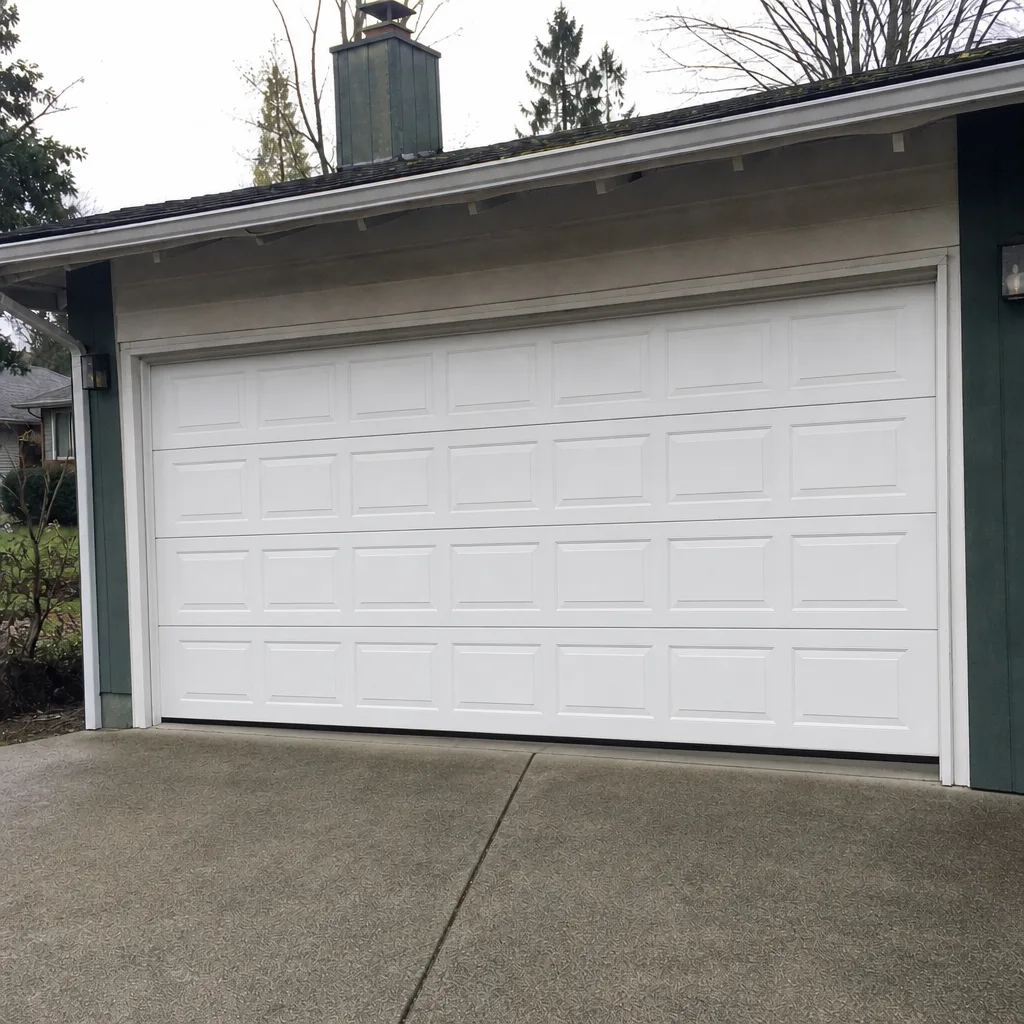 After
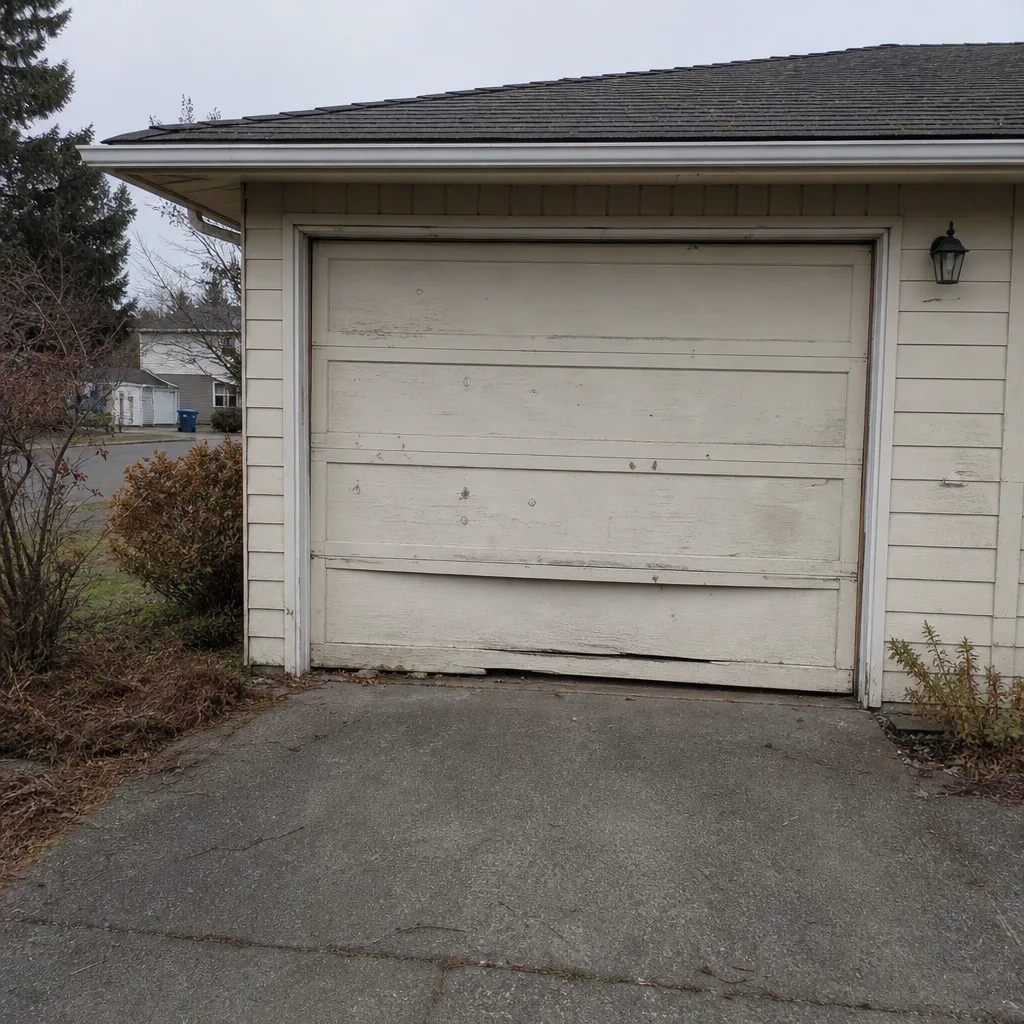 Before
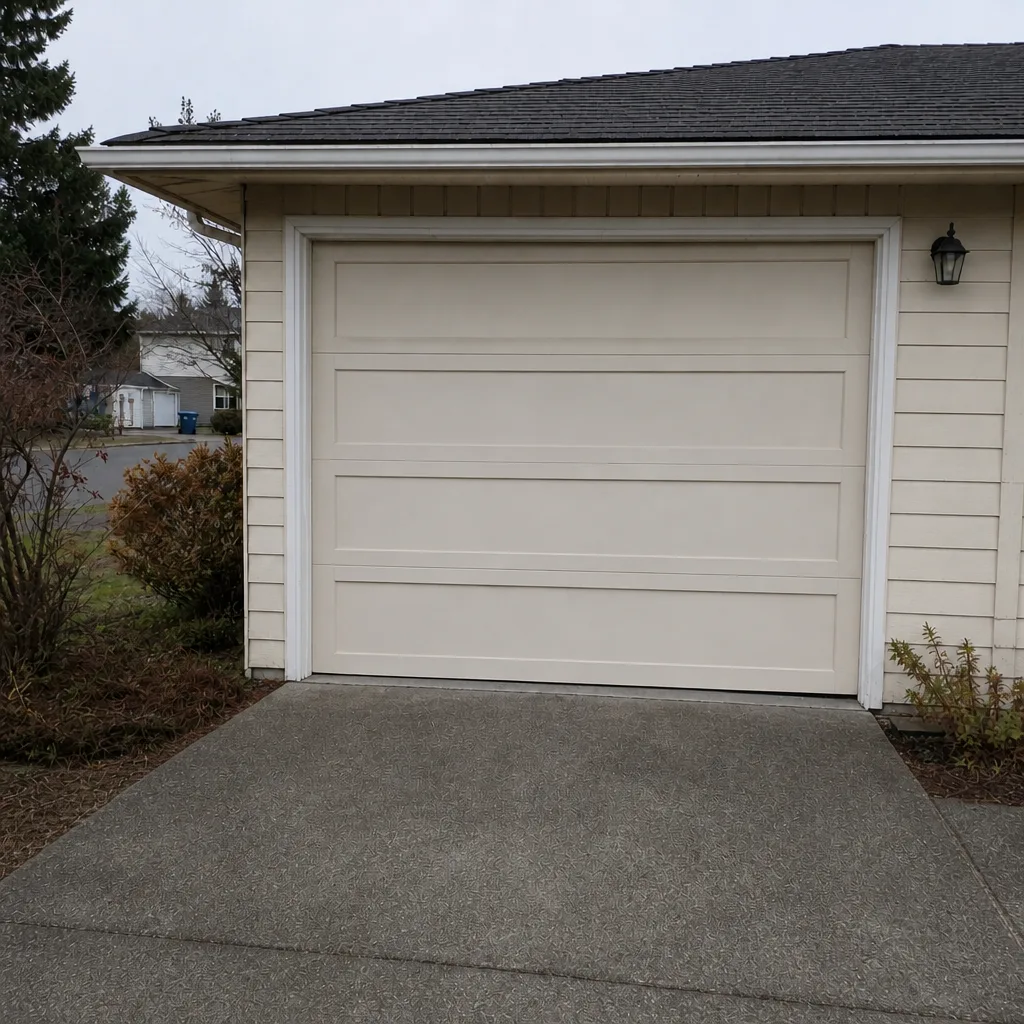 After
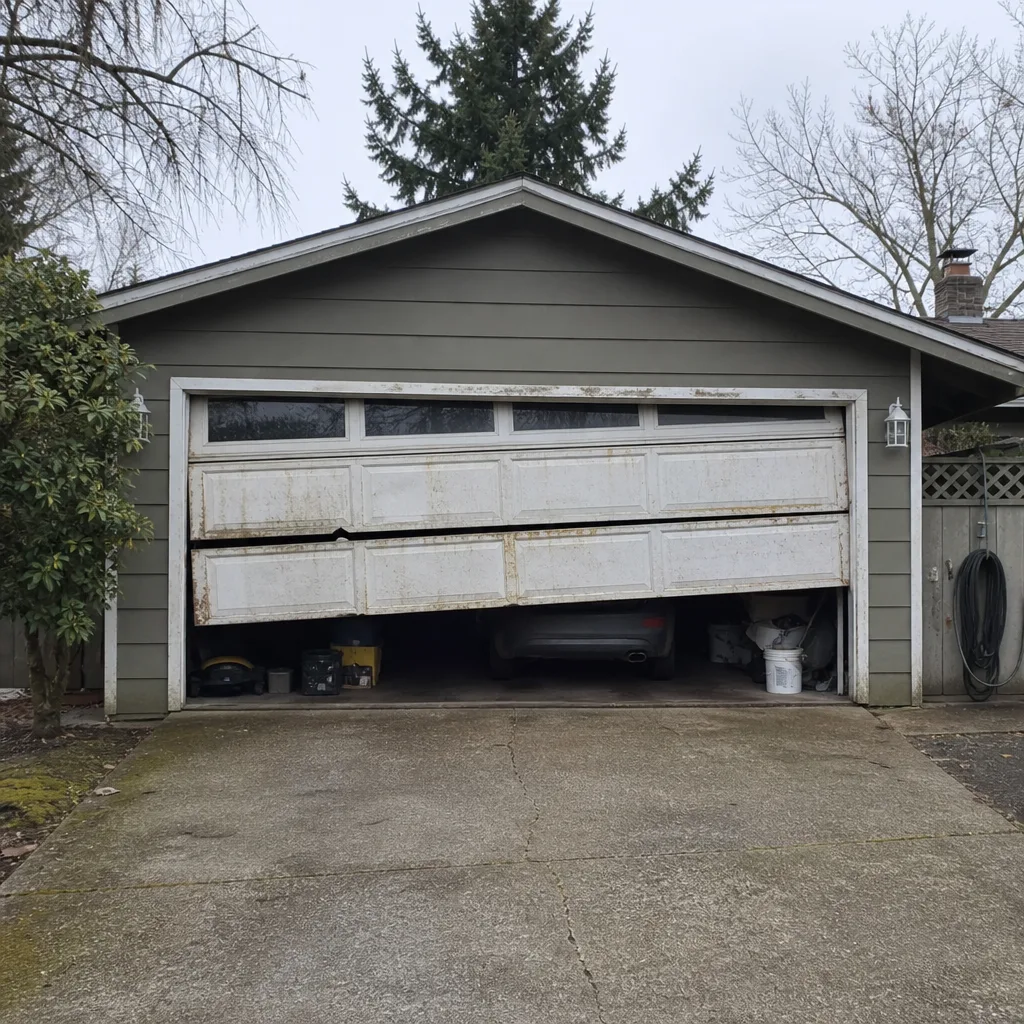 Before
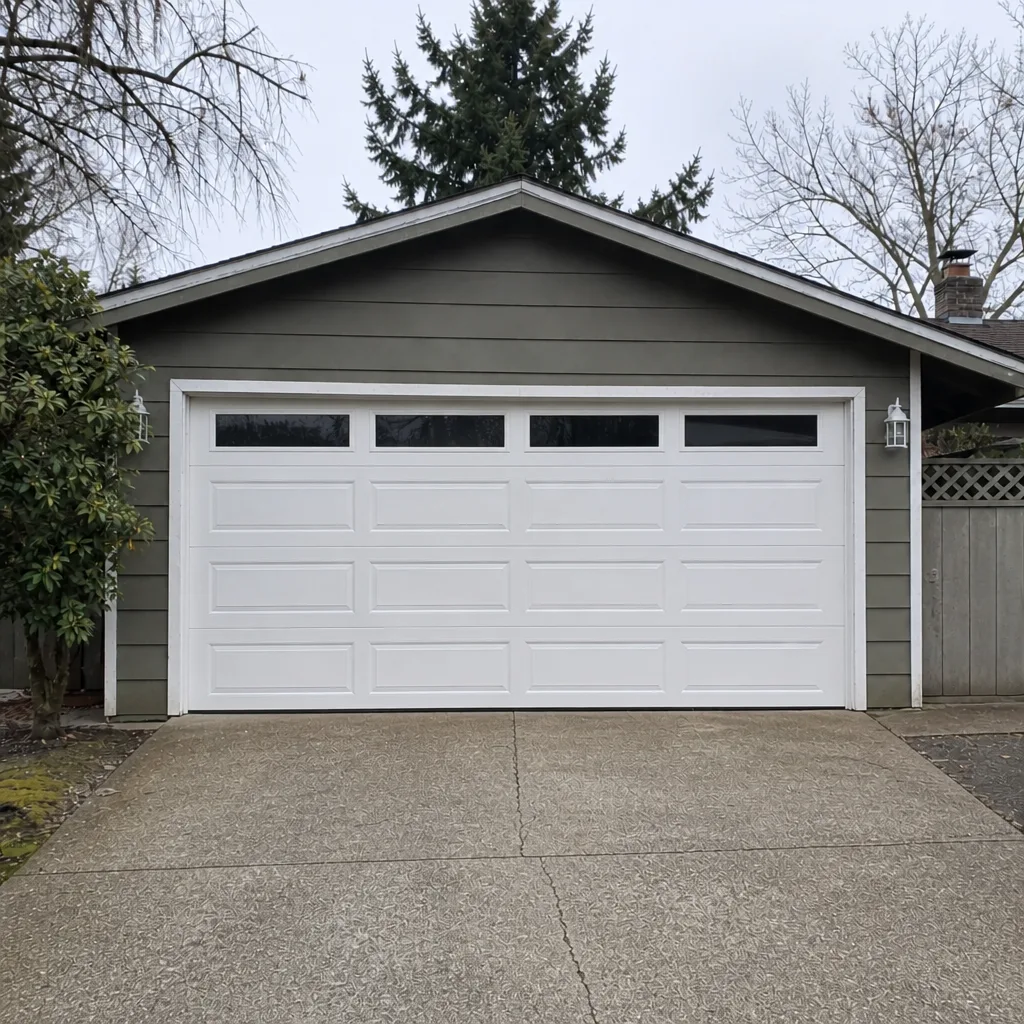 After
When to Call a Professional
Call a garage door specialist when the door won’t open or close fully, when it makes new grinding or snapping noise, when a spring looks stretched or broken, or when the opener stops responding to the remote. Call when you see a cracked or sagging bottom seal, when the door comes off the track, or when the manual release is difficult to engage. And call when the door is your primary entry point and the problem is in the way of you getting out of the house. For anything involving springs, cables, or wiring, please don’t attempt the repair yourself – the stored energy in these components is enough to cause serious injury. Shoreline Garage Door Repair Pros offers free estimates in Shoreline – call (877) 792-6114. We answer 24/7. Fast dispatch from 7am to 7pm, Sunday through Friday.
Frequently Asked Questions
Repair costs depend entirely on which component failed. A broken spring is usually a modest single repair; a full opener replacement is a larger one. Every job is priced per job by a free written estimate, so the written quote is the price you pay. Call (877) 792-6114 for an exact quote – estimates are free.
Yes – when the door is your primary entry point and you’re locked out of the house or the garage, that’s what emergency service is for. Same-day service is available for repair work. Call (877) 792-6114. We answer 24/7. Fast dispatch from 7am to 7pm, Sunday through Friday.
Yes. The technicians we connect you with are licensed and insured as local requirements apply. We work on eight major brands including Chamberlain, Genie, Clopay, and Amarr, so the technician arriving knows your equipment before touching it. Call (877) 792-6114 for a free estimate.
No – the written estimate sets the price, and work doesn’t start until you’ve agreed to it. If a technician finds an issue they couldn’t see before arrival, they’ll explain it and re-quote before doing any work. Call (877) 792-6114 for a free estimate.
Torsion springs commonly last 7 to 12 years here, and Shoreline’s wet, temperature-swinging winters can shorten that compared to drier inland markets. Extension springs tend to last a bit longer, 10 to 15 years. When the door stops holding halfway open, that’s the signal to call.
Both. We handle springs, openers, panels, and full replacements, and we install brand-new doors from Clopay, Amarr, and other major brands. A new installation is measured, ordered, and scheduled rather than same-day, so the first step is a free measure and written price. Call (877) 792-6114 to schedule.
The Bottom Line
Your garage door is a mechanical system, and in Shoreline it lives in one of the harsher climates a door can live in. The good news is that the failure points are predictable: springs, cables, seals, rollers, openers. Every one of them has a known lifespan and a simple warning sign. Do the visual inspection twice a year, test the balance once a year, and call a specialist the moment a spring, cable, or safety sensor shows a problem. Brand familiarity (LiftMaster, Chamberlain, Genie, Clopay, Amarr, Wayne Dalton, Craftsman, Raynor) means faster diagnosis. And a written estimate before the work begins means no surprise invoice. When the door won’t move, or when it’s time for a new one, be sure to contact the team.
Call (877) 792-6114 for a free estimate. We answer 24/7. Fast dispatch from 7am to 7pm, Sunday through Friday. Whether it’s a repair, a spring replacement, an opener fix, or a full installation, the price is quoted and agreed before any work starts.
Written by the team at Shoreline Garage Door Repair Pros.