
Last updated November 23, 2026
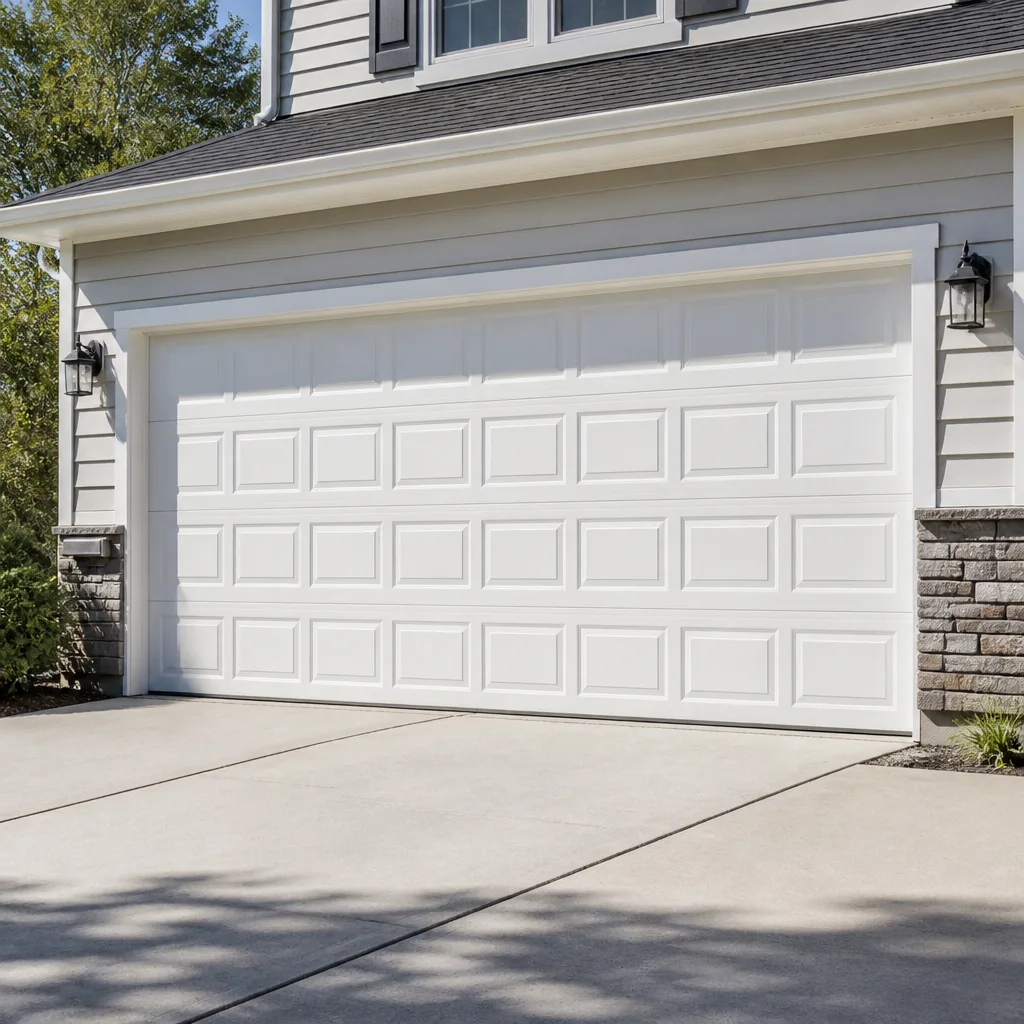 Raised-panel steel
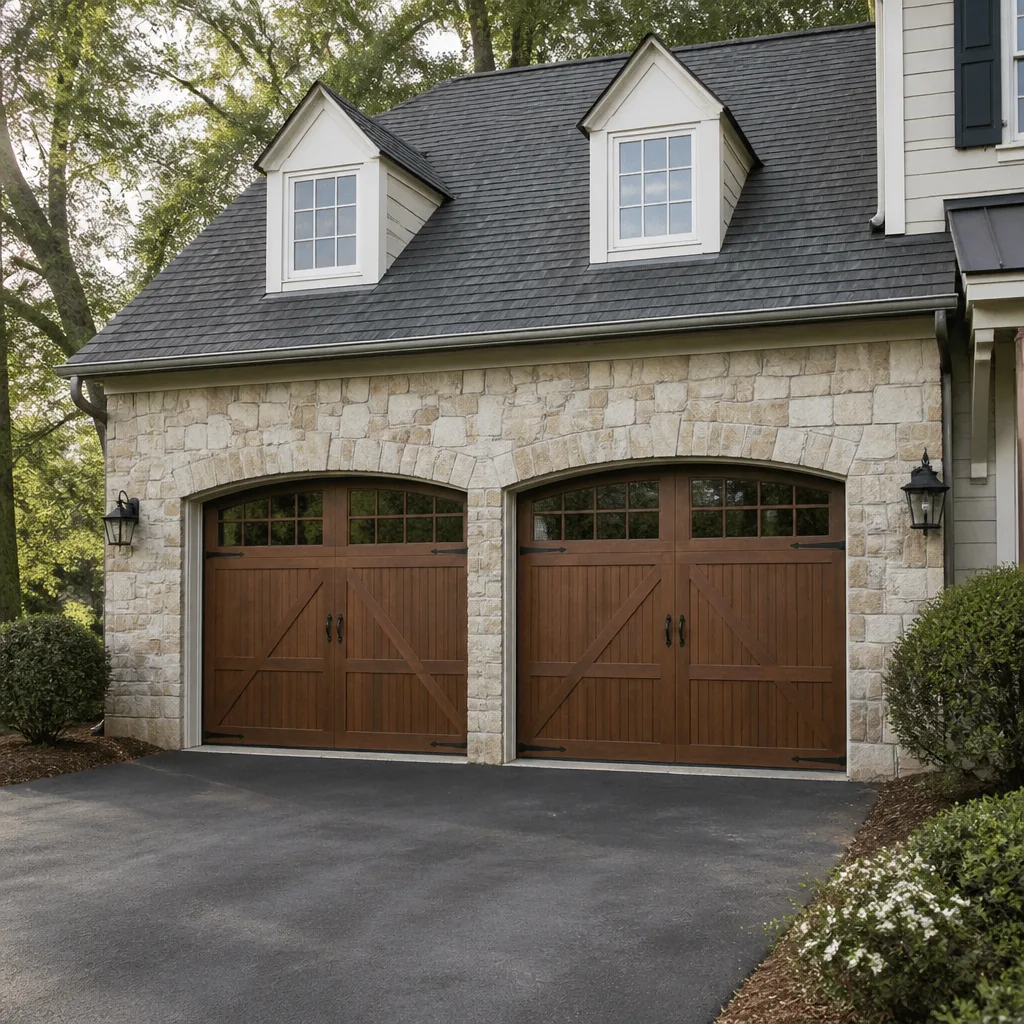 Carriage house
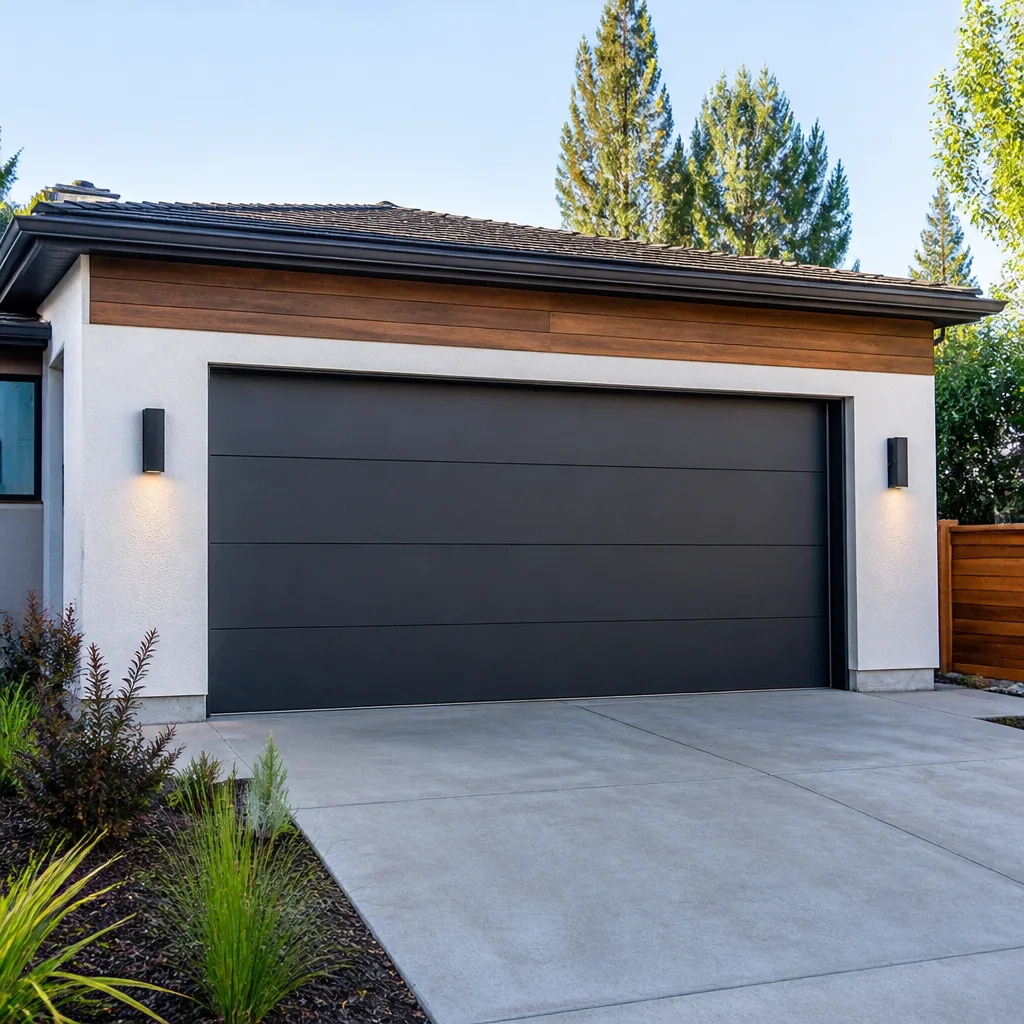 Modern flush
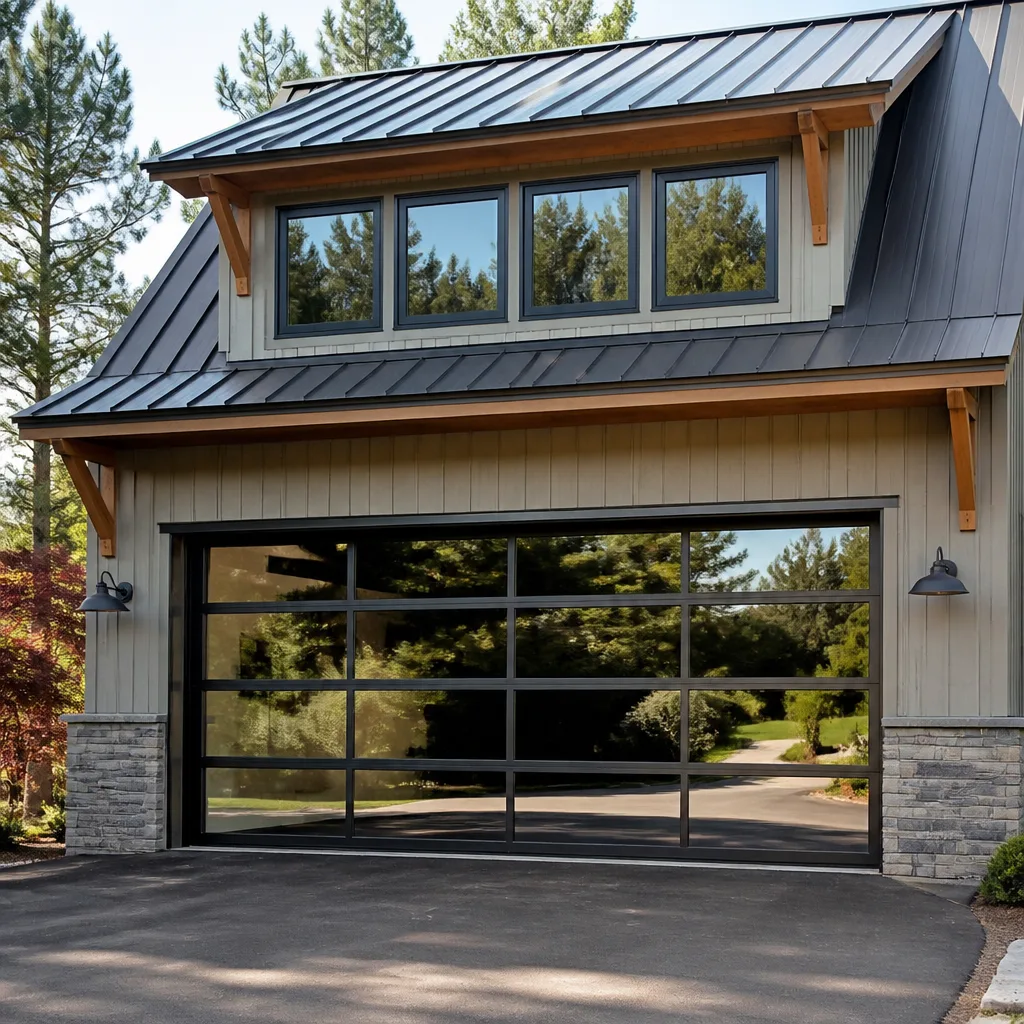 Full-view glass
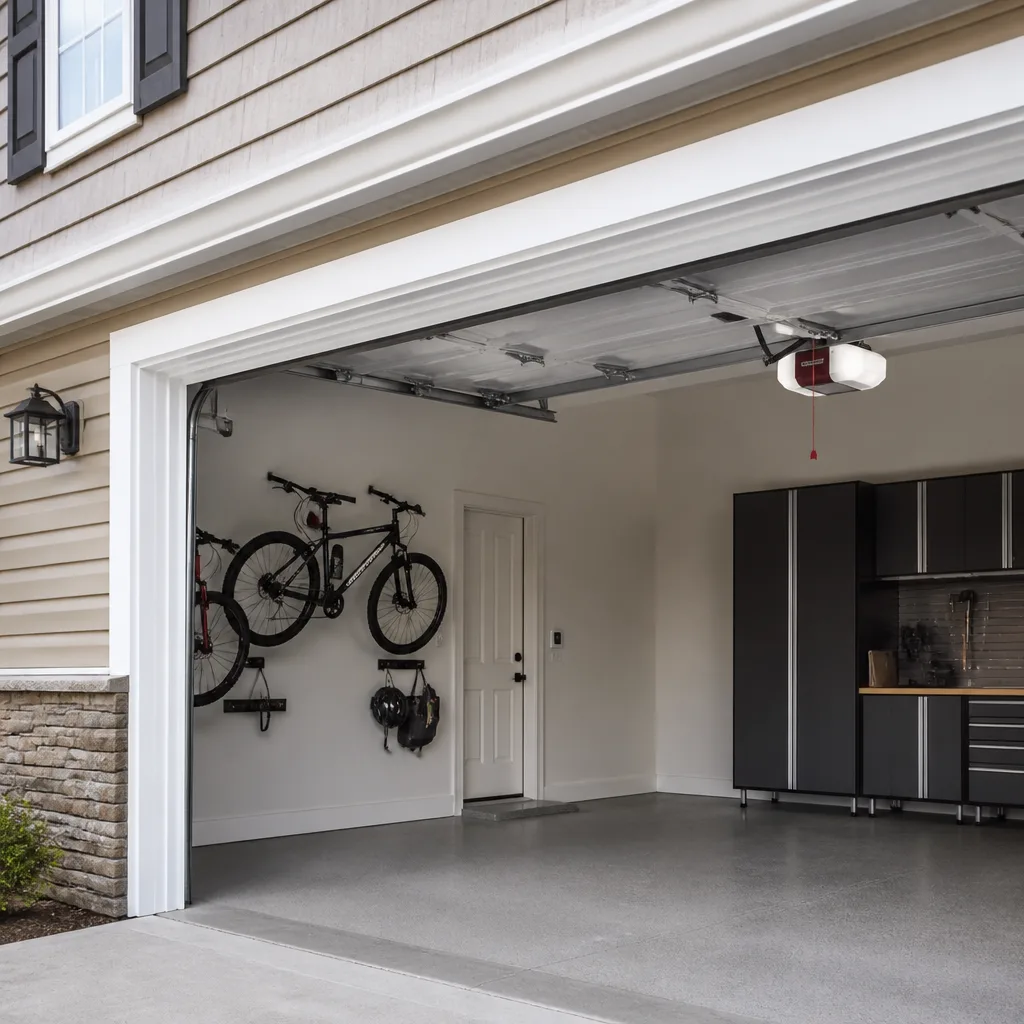 LiftMaster openers
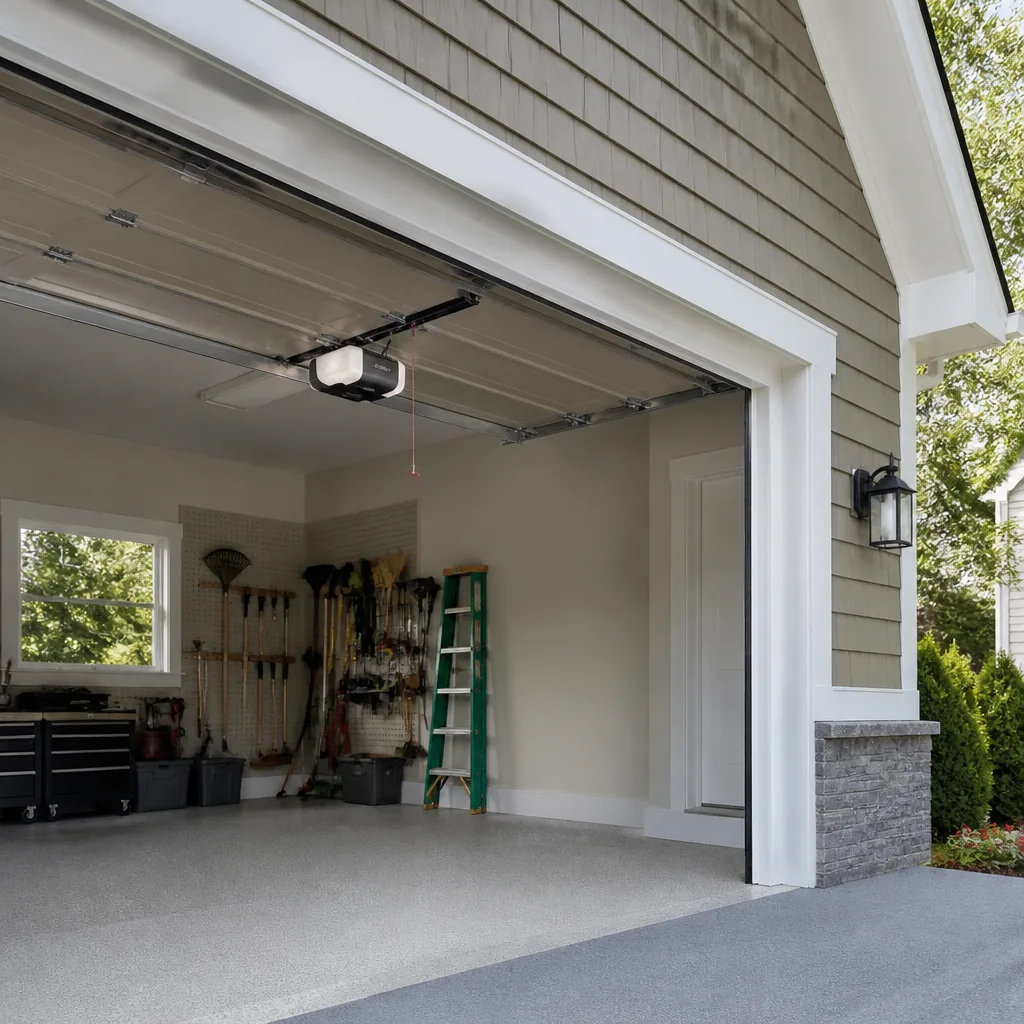 Chamberlain openers
Full 25-point door and opener safety check with every visit - springs, cables, rollers, tracks, and your LiftMaster or Chamberlain opener included
You get a price before we start. It does not change when the pro arrives.
Get your free estimateGarage Door Repair Troubleshooting in Shoreline: Common Problems and How to Fix Them
Most garage door “simple fixes” on YouTube end badly for one reason: people skip the diagnostic step and go straight to touching parts. A typical sectional door moves roughly 300 lbs of panels, hinges, rollers and springs under load, and most of that load sits in tension even when the door looks still. If you don’t know which system failed, you can’t know whether the fix is a two-minute adjustment or a call to a trained technician. This guide gives Shoreline homeowners a diagnostic framework built around five mechanical categories, so you can isolate the problem by sound and sight before you pick up a single tool.
Quick Answer
Garage door troubleshooting in Shoreline starts with one question: what does the door do, and what does it sound like? Grinding points to rollers, tracks or bearings. Clicking usually means the opener’s gears or a safety sensor. Total silence is almost always a power, remote or logic board issue. Anything involving springs or cables is a stop-and-call situation. Match the symptom to its mechanical category, confirm it with a visual check from outside the door’s path, and only then decide whether it’s a safe homeowner adjustment or a job for a trained technician.
Styles & brands we work with
- Raised-panel steel
- Carriage house
- Modern flush
- Full-view glass
- LiftMaster openers
- Chamberlain openers
Table of Contents
- The Five Mechanical Categories Behind Almost Every Garage Door Failure
- Sound First: Using What You Hear to Isolate the Failed Component
- What You Can Safely Adjust Yourself in Shoreline
- What Carries Real Injury Risk (And Why We Won’t Talk You Through It)
- How Shoreline’s Wet Climate Accelerates Specific Failures
- The One-Cable-Broken Scenario: Why It’s a Full Stop
- The Stop-Here Checklist: Five Signs to Call a Technician Now
- Prevention: What Actually Extends a Door’s Life
The Five Mechanical Categories Behind Almost Every Garage Door Failure
In our experience, nearly every garage door problem in Shoreline lands in one of five buckets. Identify the bucket correctly and the rest of the troubleshooting falls into place. Misidentify it and you’ll spend money on the wrong part.
- Balance system. Torsion springs, extension springs, cables and drums. This is the system that holds the door’s weight. Failures here are dangerous and always a professional call.
- Mechanical travel. Rollers, hinges, tracks, bearings and the door panels themselves. Failures here cause grinding, jumping, binding or a door that comes off its track.
- Power head. The opener motor, gears, logic board and capacitor. Failures here show up as dead remotes, a humming opener, or a door that reverses for no reason.
- Safety system. The photo-eye sensors near the floor and the pressure-sensing force limit. These stop the door from closing on something or someone. Failures show up as a door that opens fine but won’t close.
- Control and access. Remotes, wall buttons, keypads and smart-drive modules. Failures here are usually a pairing or battery issue, not a mechanical one.
Here’s the value of the framework: category four (safety) and category five (controls) are almost always safe for a homeowner to test. Category two (travel) is sometimes safe. Category one (balance) never is. If you can’t tell which category you’re in, stop at the visual check and call us. Our Shoreline Garage Door Repair Pros team diagnoses across all five categories every week, and the first question we ask on the phone is always the same: what is the door doing?
Sound First: Using What You Hear to Isolate the Failed Component
Your ears are a better diagnostic tool than most people realize. Stand outside the door’s path, watch it from the side, and listen carefully through one full open-and-close cycle. Note when the sound happens and what kind it is. That timing alone narrows the category.
Grinding
Grinding is metal on metal, and grinding under load is a wear failure. Most often it’s worn rollers or dry hinge points, sometimes a bearing on the torsion shaft. Grinding that gets worse near the top of travel usually points to the torsion shaft or a worn end bearing plate. Grinding throughout the cycle means rollers and hinges.
Clicking
A rhythmic click that matches the door’s movement is usually a chain or belt tension issue, or a worn sprocket on the opener. A single click at the moment the door starts to move is often the opener’s gear or logic board tripping onto a safety reverse. Rapid clicking with no movement at all usually means the opener is trying to run against something binding (a travel problem) or the force limit is set too tight.
Humming With No Movement
This one identifies itself. The opener motor is trying to run but the door isn’t moving. That’s either a broken spring (the opener can’t lift the weight), a stripped opener gear, or a manual release that has been pulled and never reset. Check the release cord first from outside the door. If it’s hanging loose, that’s a category five problem with a simple reset.
Silence
Total silence means the opener isn’t getting power or isn’t getting the signal. Before you assume the worst, check three things: the breaker, the wall outlet serving the opener, and whether the wall button works when the remote doesn’t. If the wall button works and the remote doesn’t, you’re in category five (controls). If neither works, you’re in category three (power head). Either way, no tools and no injury risk.
In Shoreline, a lot of older homes have openers mounted on ceiling joists that flex slightly as the house settles, and that flex can loosen a chain over time. A chain that slaps the rail or pops off the sprocket is a category three problem, not a category two. That’s why we listen before we open anything up.
What You Can Safely Adjust Yourself in Shoreline
Some garage door adjustments are genuinely safe for a homeowner with basic tools and a bit of patience. We’d rather tell you which ones than have you guess. Here’s the short list.
Photo-Eye Alignment
The two small sensors near the bottom of the door frame must aim at each other. If one is knocked out of alignment or has a cobweb across the lens, the door will open but refuse to close. Wipe both lenses with a soft cloth and adjust the bracket by hand until the small indicator light on each sensor is steady. This is a two-minute fix and it’s the single most common reason a door won’t close.
Remote Reprogramming
If one remote works and another doesn’t, the second remote has lost its pairing. Every opener brand pairs a little differently: LiftMaster and Chamberlain use a learn button on the power head, Craftsman usually matches the same pattern, and Raynor openers vary by model year. The owner’s manual is the fastest reference, and reprogramming doesn’t put your hands anywhere near a moving part.
Limit Switch and Force Adjustment (With Caution)
Most openers have two adjustment screws or dials: one sets how far the door travels, the other sets how much force the opener applies before it reverses. If your door stops a few inches short of the ground, a small limit-switch adjustment is reasonable. Turn it a quarter-turn at a time, test, and stop. If you find yourself making repeated adjustments, stop and call – that’s usually a symptom of a travel-system problem, not an opener setting.
On the opener side, we work on LiftMaster, Chamberlain, Genie and Craftsman units regularly, and the brands show up on every model year from the early 1990s to today. If your opener’s manual is long gone, tell us the model when you call and we can usually talk you through which dial is which.
Track Straightening (Minor Only)
If a track has a small dent or a section that’s bent less than an inch, you can sometimes straighten it gently with a rubber mallet. If the track is bent more than that, or if the bend comes back after you straighten it, the track is out of alignment at the mounting brackets and needs a proper adjustment.
If you get into any of these and the door starts doing something new – jumping, jerking, scraping – stop. New symptoms are a signal that the problem is deeper than the adjustment you were trying to make. Our garage door repair team can pick up from wherever you stopped.
What Carries Real Injury Risk (And Why We Won’t Talk You Through It)
We’re going to be direct here, because this is the part where homeowners get hurt. Two systems on any garage door carry enough stored energy to seriously hurt you: the springs and the cables. We will not give step-by-step instructions for either, and we’d rather lose a call than have someone try.
Springs
Torsion springs on a standard residential door hold 200 to 300 pounds of torque, and they hold it whether the door is open or closed. Extension springs hold similar force along the horizontal tracks. When one fails during service, it releases that energy in a fraction of a second. Trained technicians use specific winding bars and specific procedures for a reason: the tools and the sequence are what keeps the energy contained. Springs also come in matched pairs for a reason, and a matched pair needs to be replaced together because the old and new springs won’t share load evenly. Our garage door spring repair technicians work with both torsion and extension systems and can tell you in a phone call what a typical Shoreline job involves.
Cables
Cables run from the bottom bracket up to the cable drum, and they’re under the same tension the springs create. Loosening a cable without first releasing the spring tension is one of the most reliable ways to lose a finger or worse. Cable drums are mounted on the torsion shaft and require the spring to be wound down before the drum is touched. There is no safe homeowner version of this work.
Bottom Brackets
The bottom bracket is the piece the cable attaches to at the base of the door. It’s under direct cable tension. Homeowners sometimes try to replace one after noticing rust, and this is one of the most dangerous pieces on the door to touch. If you see rust on a bottom bracket, treat it as a call-the-pro sign, not a weekend project.
Anything that involves physically unwinding, releasing, loosening or replacing a spring, cable or bottom bracket is a trained-professional job. That’s not gatekeeping; it’s the physics.
How Shoreline’s Wet Climate Accelerates Specific Failures
Shoreline gets a lot of rain from late fall through spring, and the wet-dry cycling does specific damage that most national garage door guides don’t mention. If you’ve read a generic troubleshooting page and it doesn’t match what you’re seeing, the odds are good that climate is the difference.
Rusted Bottom Brackets and Bolts
The bottom bracket and the bolts that hold it sit inches from the ground and catch splash from every rainstorm. Over a few seasons, the zinc coating on the bolts gives way and rust sets in. That rust weakens the bracket’s grip on the cable. If you’re doing a visual inspection and you see rust bubbling on the bottom bracket or the lift cables at their lower ends, that’s a stop and call.
Swollen Wood Bottom Seals
The bottom rubber seal protects the gap between the door and the floor. On older wood-framed doors (common in Shoreline’s mid-century neighborhoods like Ridgecrest and North City), water that pools at the threshold gets wicked into the wood behind the seal. The wood swells, the seal pulls away, and the door starts catching on the frame. You can sometimes spot this by watching the bottom of the door as it closes – if it lifts a fraction of an inch at one corner, the seal or the frame is swollen.
Seized Rollers and Hinges
Rollers and hinges need lubrication, and in a wet climate the grease gets washed out faster than in a dry one. Seized rollers cause the door to drag, and dragging puts extra strain on the opener. A door that opens and closes fine in July can start skipping in January simply because the roller bearings dried out over the wet season. This is one of the reasons we recommend a look at your rollers every fall.
Warping Panels
Wood and composite panels absorb moisture at the edges and swell unevenly. A panel that has warped slightly will still look fine from the curb but will bind in the track. If your door binds at one specific height every time, take a close look at the panel edges near that height – you’ll often see a slight curve where the moisture got in.
If you suspect climate is the cause, a trained eye is worth the call. We can look at a door in Shoreline and tell you within a few minutes whether the failure is climate-related and what it’ll take to correct. Our garage door opener repair technicians see the opener side of these failures constantly, because dragging doors burn out opener capacitors faster than anything else.
The One-Cable-Broken Scenario: Why It’s a Full Stop
Here’s a scenario that surprises a lot of homeowners: one of the two lift cables snaps, and the door still opens and closes. It might move at a slight angle, or it might look completely normal. Your first instinct is to think you got lucky. You didn’t. A door running on one cable is a door that can drop without warning, and it needs to be treated as an emergency even though it looks fine.
Why One Broken Cable Is Dangerous
On a standard torsion system, the two cables work together with the springs to keep the door square and supported. When one cable fails, the remaining cable takes the entire load on one side, and the door’s weight is now uneven. The drum on the failed side has nothing keeping the door level. If the remaining cable slips or the door shifts, the door can drop hard. If a person or pet is underneath at that moment, the result can be serious injury.
How to Tell
Get outside and look at the door from a safe distance – well out of the door’s path and above the springs. Look for:
- A cable visibly hanging loose, coiled on the floor, or wrapped wrong around the drum.
- The door sitting lower on one side, or a visible gap between panels on one side that wasn’t there before.
- The door travelling at an angle instead of straight up.
- A loud bang followed by the door not opening at all, or opening and closing but with an uneven feel.
What to Do
Stop. Take the door out of service by not using the opener or the manual release. Then call for emergency garage door service. In Shoreline, a door stuck open is a security problem for the whole house – the garage is often the primary entry point for a lot of homes, and an open garage door at night is a serious concern. This is exactly the kind of situation our emergency garage door service exists for. When the door won’t move or won’t stay closed, don’t wait for a scheduled appointment. Call (877) 792-6114. We answer 24/7. Fast dispatch from 7am to 7pm, Sunday through Friday.
The Stop-Here Checklist: Five Signs to Call a Technician Now
If you see any of these five, stop your inspection and call. Don’t continue looking, and don’t test the door. Our technicians have up to 10 years of experience and can usually diagnose from the phone, so you’ll know whether it’s a tomorrow problem or a now problem.
- Visible spring gap. A torsion spring that has a visible gap of an inch or more means the spring has broken. The door is now held only by the opener and cables. Stop.
- Cable hanging or coiled. Any cable that’s off its drum, coiled on the floor, or wrapped incorrectly is a broken or misrouted cable. Stop, and treat it as an emergency.
- Rust on the bottom bracket. Rust on the bracket bolts or the lower cable ends is the danger sign we covered above. Call before you use the door again.
- Door out of track by more than an inch. A door that’s visibly off its track is a door that can come down. Stop, close it if you can do so safely, and keep people out of the garage.
- Repeated safety reverse on a clean lens. If you’ve cleaned the photo-eyes and the door still reverses on contact, the force limit is misadjusted, or there’s a travel problem. Either way it’s a call.
If you can’t safely reach any of these checks – for instance, if the door is stuck open and you can’t get near it – treat that as the answer. Call (877) 792-6114. We answer 24/7. Estimates are free, and the price is quoted and agreed before any work starts.
Prevention: What Actually Extends a Door’s Life
Most of what we fix in Shoreline was fixable months earlier with a five-minute check. Here’s the routine that does the most good.
- Lube the moving parts every fall. White lithium grease on rollers, hinges and the torsion shaft bearing. Avoid the tracks themselves, which stay cleaner if you simply wipe them with a rag.
- Check the balance by hand once a season. Disconnect the opener by pulling the release cord, lift the door halfway by hand and let go. If it stays put, the balance system is healthy. If it drops or flies up, call a pro. Do not do this if the door won’t stay up at any point; just stop.
- Wipe the photo-eye lenses. Rain, dust and pollen build up on them constantly in this climate. A soft cloth every couple of months prevents the most common “won’t close” call.
- Watch the bottom seal in fall. Check the seal and the wood behind it for swelling as the rainy season starts. This is where the climate gets you, and catching it early is cheap.
- Listen for the new sound. A door that introduces a new sound in a season is telling you something. Address it early rather than waiting for it to become a failure.
If you’re in the market for a new door rather than a repair, this is the same conversation. The team that services and installs eight of the most common brands – LiftMaster, Chamberlain, Genie, Clopay, Amarr, Wayne Dalton, Craftsman and Raynor – is the team that can tell you whether your current door is worth repairing. We’d rather save you the cost of a full replacement when a repair will do.
Common Mistakes to Avoid
- Pulling the manual release with the door up. If the door is open and you release the opener, the door will come down under its own weight if the springs are broken. Release the cord only when the door is fully closed.
- Spraying lubricant on the tracks. Grease on the tracks attracts dust and grit, and the door starts to bind. Clean the tracks, don’t grease them.
- Adjusting the force limit to fix a symptom. Turning up the opener’s force to get past a binding door forces the opener to work harder and usually shortens its life. The binding is the problem, not the force setting.
- Ignoring rust on the bottom bracket. It’s the piece most likely to fail without warning, and the one most likely to be overlooked because it’s low and dirty. Check it every fall in this climate.
- Tightening the springs by hand. A torsion spring that’s been wound by hand is a spring that can unwind on you. This is the single most common serious-injury mistake we hear about in Shoreline, and it’s entirely avoidable.
- Running the door on one cable. We covered it above, and it’s worth repeating: one cable broken means the door is not safe to use, even if it opens and closes.
- Calling a generalist handyman for a spring or cable. These are specialized repairs with specific tools. A generalist who guesses can turn a $250 repair into a full door replacement, and the injury risk is real.
See the difference
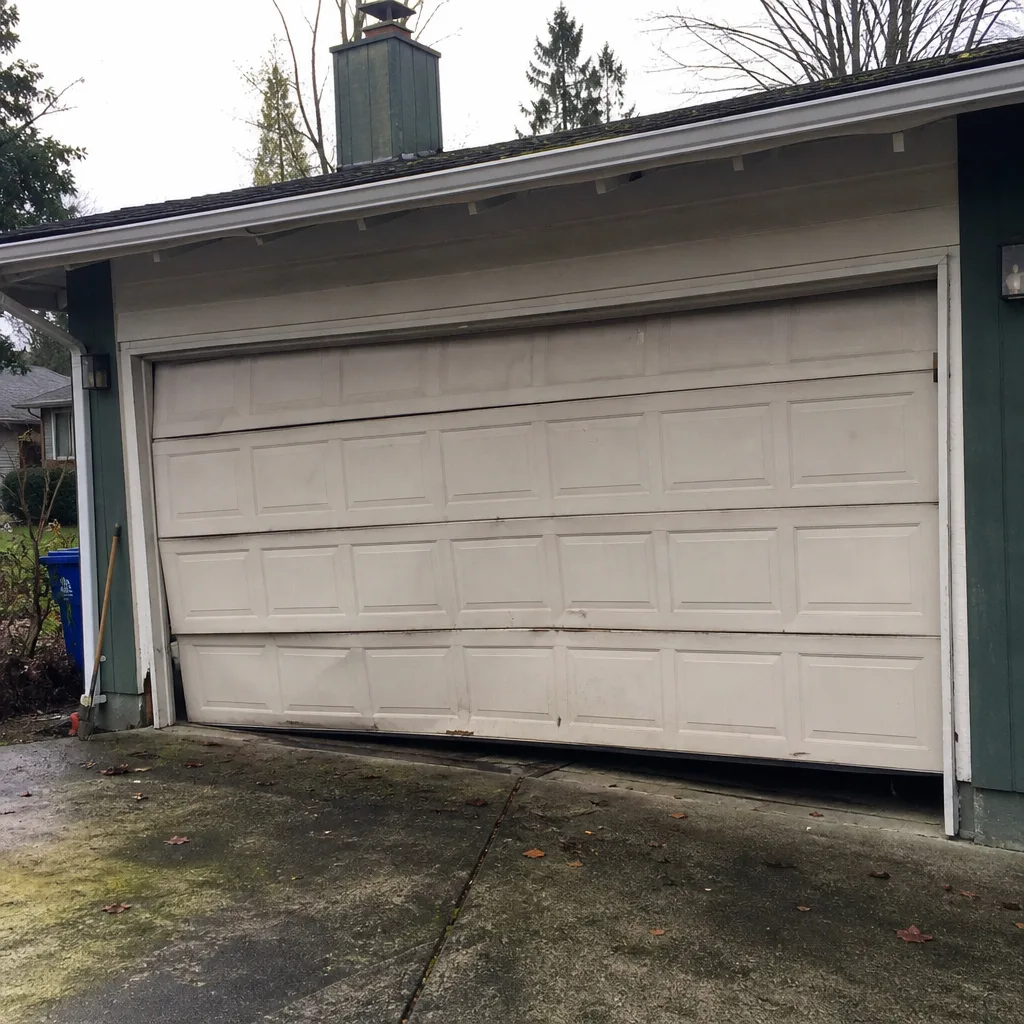 Before
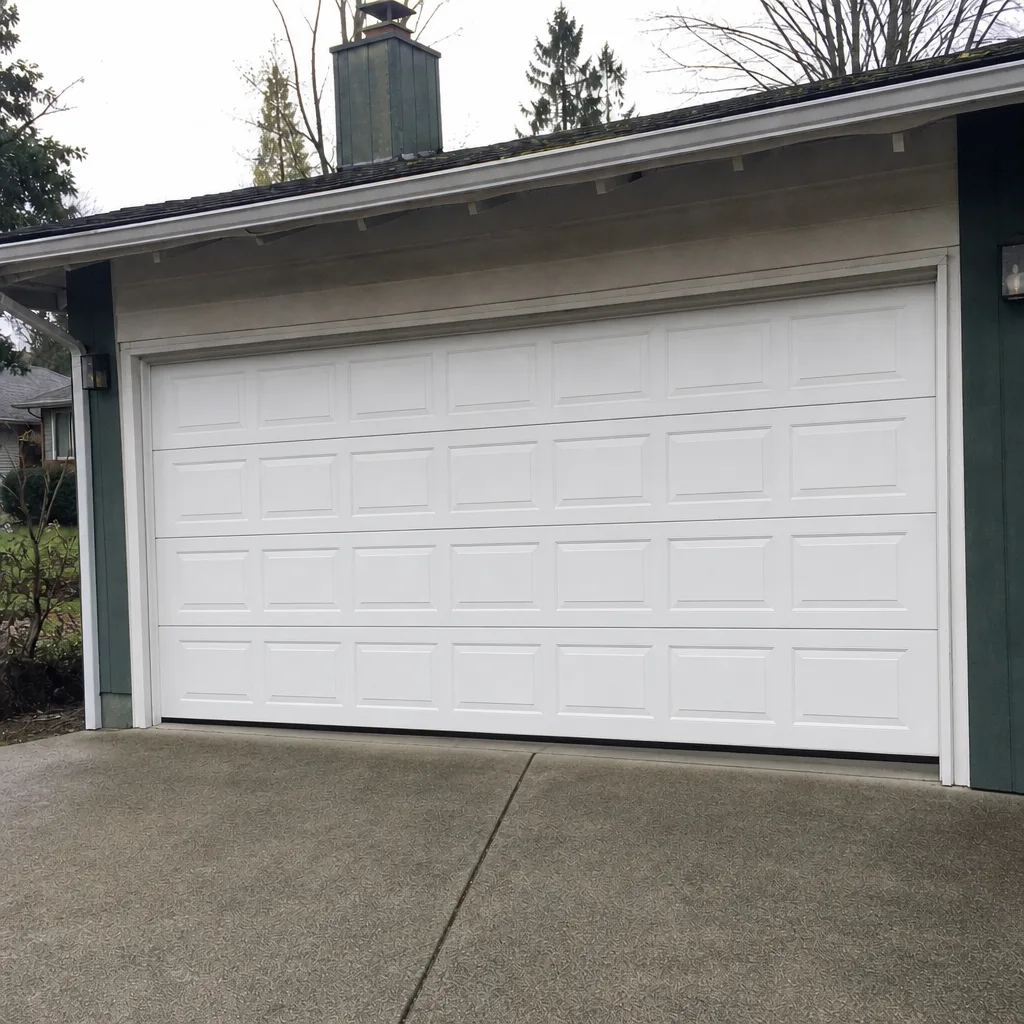 After
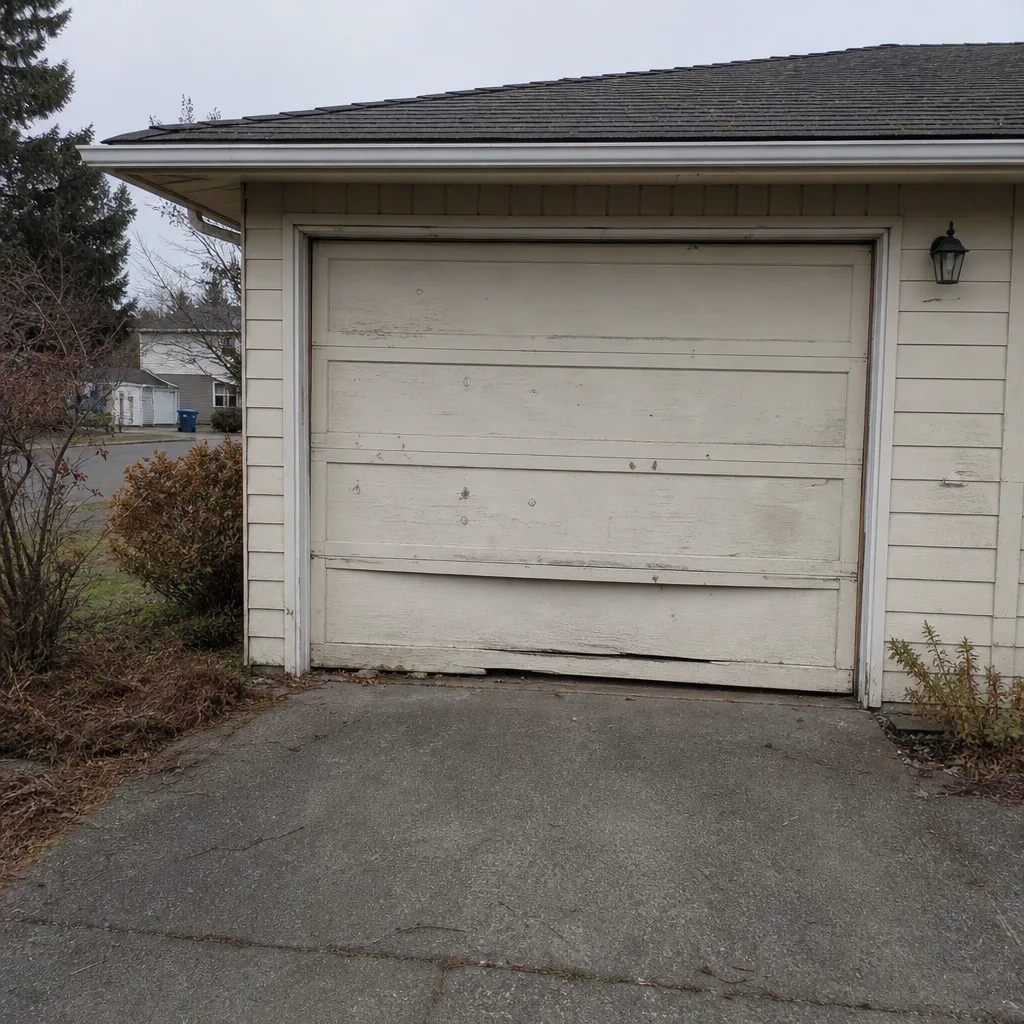 Before
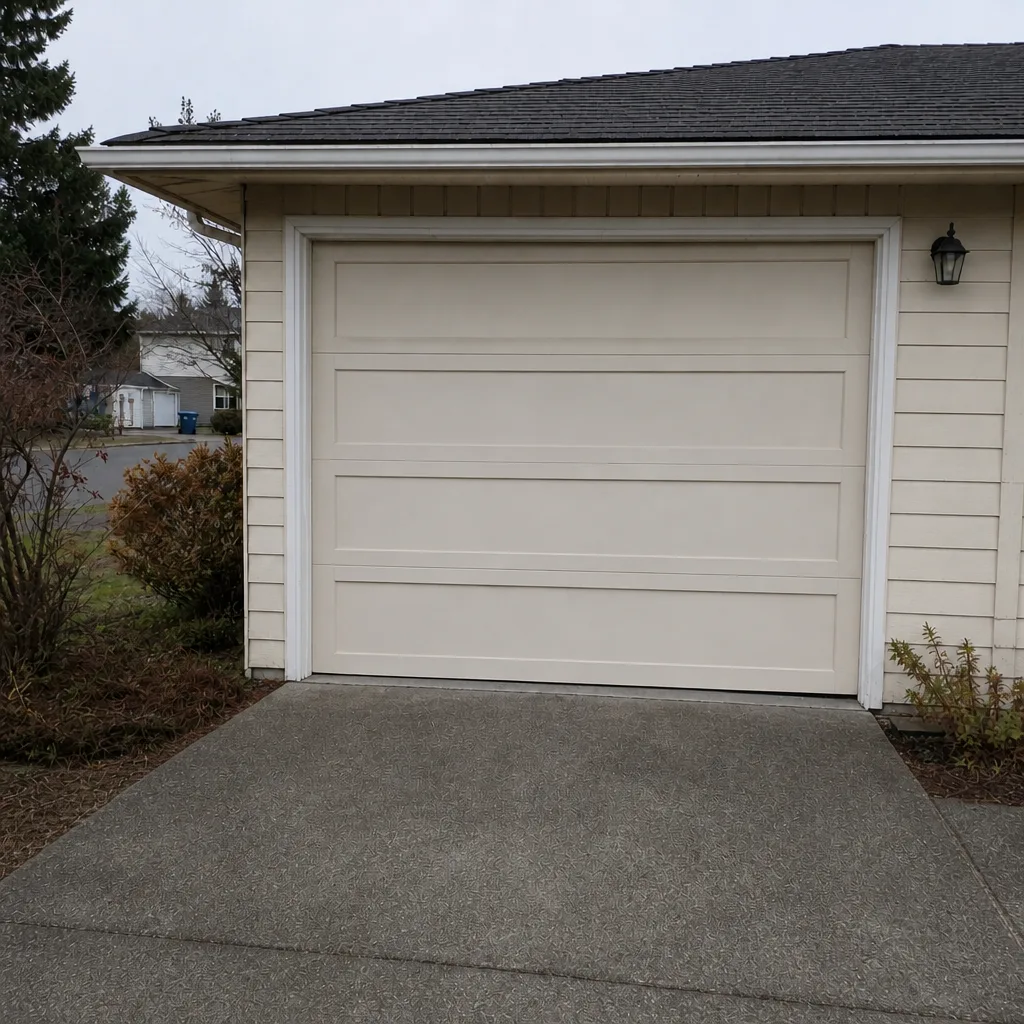 After
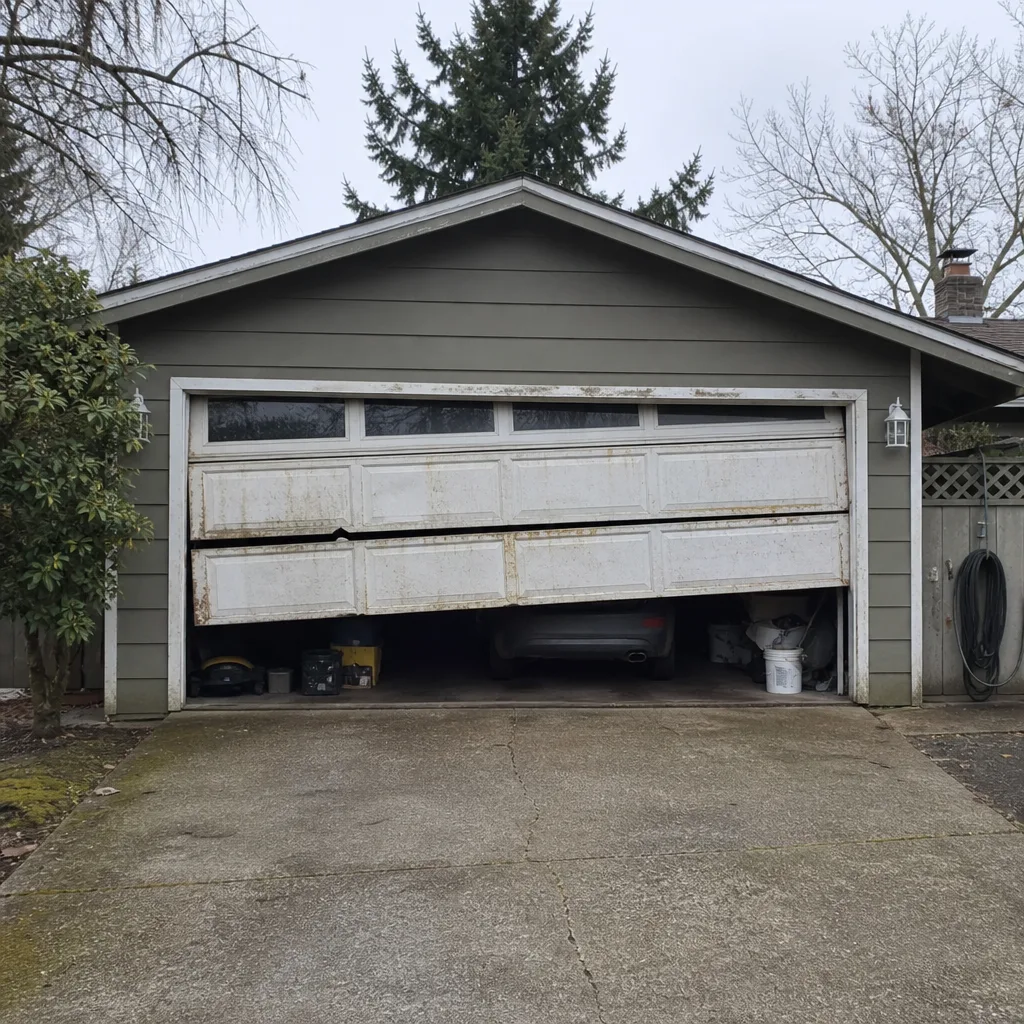 Before
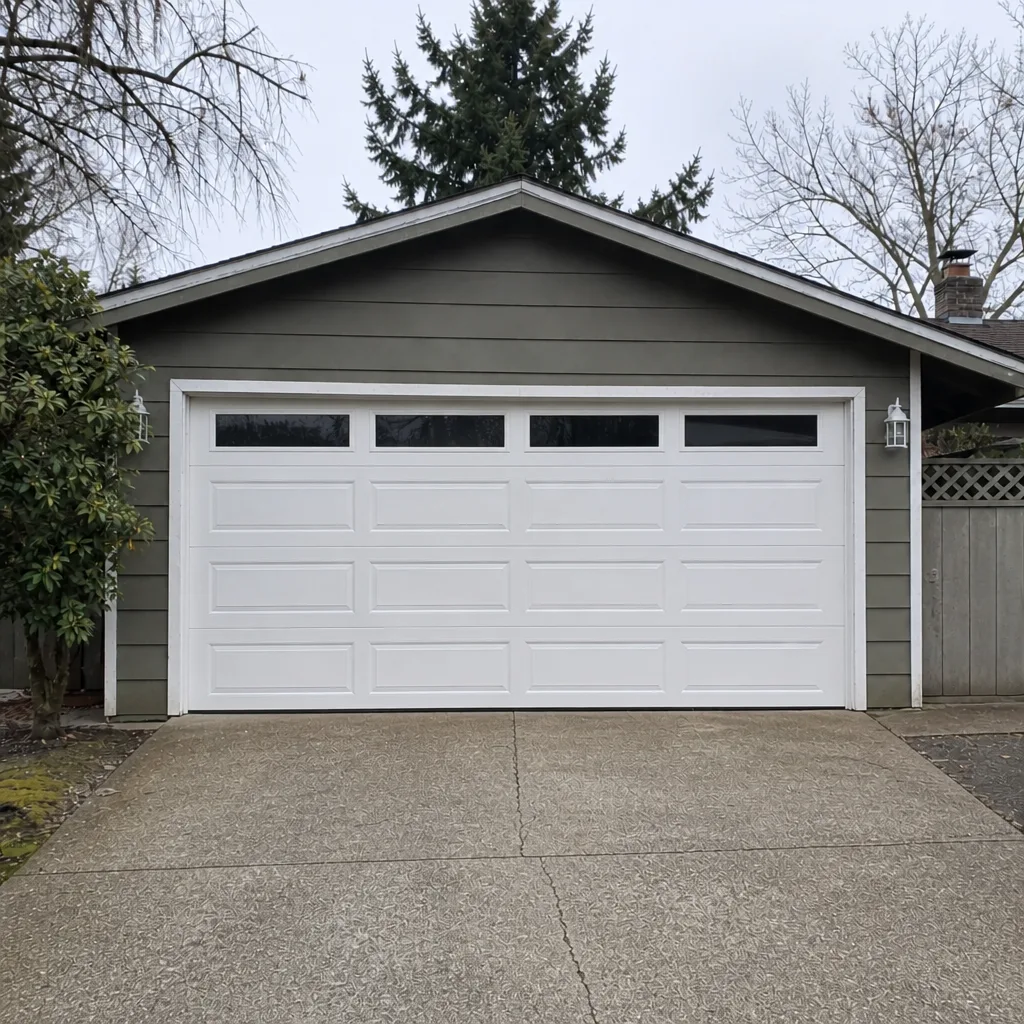 After
When to Call a Professional
Call a professional the moment your diagnostics land in the spring, cable or bottom-bracket category, and the moment a door fails a balance check. Call for any door that’s off its track by more than an inch, and for any door that reverses on contact after you’ve cleaned the photo-eyes. Call for an opener that reverses on its own or a wall button that no longer responds, because those are usually logic board issues that need brand-specific knowledge. And call for a door that’s stuck open, especially after dark, because a garage door that won’t close is a security concern for the whole house. Shoreline Garage Door Repair Pros offers free estimates in Shoreline. Call (877) 792-6114. We answer 24/7. Fast dispatch from 7am to 7pm, Sunday through Friday, and the price is set by the written estimate before we start.
Frequently Asked Questions
Most garage door repairs in Shoreline fall in a few common ranges, and the written estimate you get before any work starts is the price you’ll pay. Here are typical ranges we see:
- Photo-eye realignment or remote reprogramming: usually a small service call, often folded into a larger visit.
- Roller and hinge replacement: roughly $150 to $300 per door, depending on how many are replaced.
- Opener repair (gear, capacitor, logic board): roughly $180 to $400, depending on the brand and part.
- Single torsion spring replacement: roughly $180 to $340 for one spring; a matched pair costs about twice that, and pairs are usually replaced together.
- Single extension spring: roughly $100 to $200 for one spring, with matched pairs priced accordingly.
- Cable replacement: roughly $150 to $300 per cable, more if both cables and drums are replaced together.
Call (877) 792-6114 for an exact quote on your door. Estimates are free.
Look at the torsion spring on the shaft above the door. A working spring is a tight coil. A broken torsion spring shows a visible gap of an inch or more somewhere along the coil, and the door will suddenly feel extremely heavy when you try to lift it. On extension springs, look along the horizontal tracks: a broken spring will be visibly stretched or have a gap. Don’t try to test the door if you see either sign. Call (877) 792-6114 for a free estimate.
In most cases yes, and a door that won’t close is exactly the kind of call we prioritize. A garage door stuck open leaves the house exposed, and in Shoreline that’s a security concern we don’t want you sitting on. Call (877) 792-6114. We answer 24/7. Fast dispatch from 7am to 7pm, Sunday through Friday.
No. The price you’re quoted is the price you pay, and it’s agreed in writing before any work starts. If we get on site and find something different from what the phone diagnosis suggested, we’ll tell you before we do anything, and you can approve or decline. There are no surprise add-ons at the end of the job.
The local professional we connect you with is licensed and insured as their state requires, and trained on the specific brands we service. Our technicians have up to 10 years of experience, and they work on LiftMaster, Chamberlain, Genie, Clopay, Amarr, Wayne Dalton, Craftsman and Raynor equipment. For spring and cable work specifically, ask for a technician trained on those systems when you call. Call (877) 792-6114 for details.
Yes, treat it as one. A slack or misrouted cable means the door is running on one side, and the remaining cable is taking the full load. The door can look completely normal and then drop without warning. Take it out of service and call (877) 792-6114. We answer 24/7, and a cable issue is exactly the situation our emergency garage door service is designed for.
The Bottom Line
Garage door troubleshooting works best when you diagnose before you touch anything. Match the symptom to one of the five categories, use sound to narrow it down, and be honest with yourself about whether you’re in a safe-to-adjust situation or a stop-and-call one. Photo-eyes, remotes and small limit-switch tweaks are fair game for a Shoreline homeowner with basic tools. Springs, cables and bottom brackets are not, and no amount of YouTube can change the physics of stored energy. When the diagnosis lands on the pro side, call us. Free estimates, written pricing before work starts, and a team that already knows your brand.
Written by the team at Shoreline Garage Door Repair Pros.